
Bankart repair and shoulder stabilisation surgery
Surgery to tighten and secure the shoulder joint to prevent dislocation.
We offer advanced surgical techniques to repair torn ligaments, reduce the risk of further dislocations and restore shoulder stability and strength.
At a glance
-
Typical hospital stay
Usually overnight, occasionally day case -
Procedure duration
1–2 hours -
Type of anaesthetic
General -
Available to self-pay?
Yes -
Covered by health insurance?
Yes
Why Spire?
- Fast access to treatment when you need it
- Expert, personalised treatments
- Internationally and nationally renowned consultants
- Clear, simple pricing and flexible payment options
What is shoulder stabilisation?
Arthroscopic shoulder stabilisation is a surgical procedure performed to treat an unstable shoulder joint, usually as a result of injury or repeated dislocations. The operation is typically carried out as keyhole surgery to repair damaged tissue, tighten the joint and help prevent further dislocations.
The procedure is highly effective, with more than 9 out of 10 people reporting good shoulder stability following surgery and a low recurrence rate of around 6 in 100.
Why shoulder stabilisation may be carried out
The shoulder is the most mobile joint in the body, and the most commonly dislocated. It’s formed from the ball of the upper arm bone sitting in a shallow socket in the shoulder blade. A group of muscles called the rotator cuff attach to the ball, and ligaments connect to a ring of cartilage around the socket called the labrum. These structures work together to keep the shoulder stable.
If these tissues become stretched or torn, or the bone damaged, the shoulder can dislocate, causing pain and reduced movement. This usually happens following an accident or trauma to the joint.
Your shoulder can dislocate at any age, but it’s more common in young people and those who participate in racket, overhead, or contact sports. Following a trauma injury, young people are at higher risk of the dislocation recurring.
Is shoulder stabilisation right for you?
If your shoulder instability is affecting everyday activities or you’re at risk of further damage to the ligaments, cartilage or bone, surgery may be recommended. However, some people can manage their symptoms with physiotherapy and activity modification.
Shoulder stabilisation is normally suggested if there is an obvious tear or major damage to the shoulder, if the shoulder feels loose and you’ve dislocated it before, or if non-surgical treatments have failed to improve your shoulder function.
Find your nearest Spire hospital
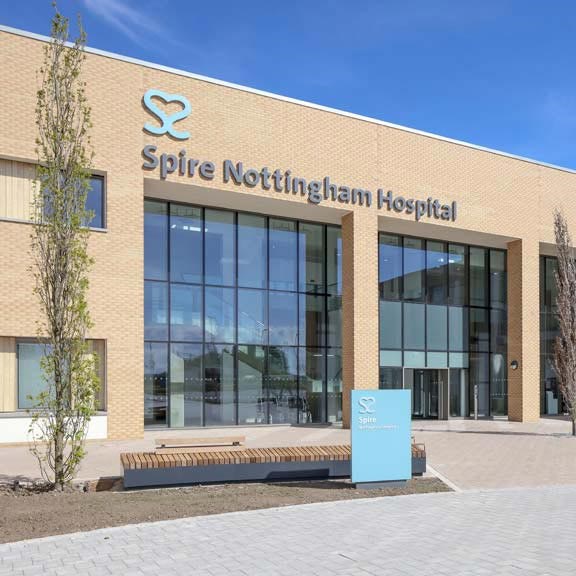
Many of our hospitals offer private shoulder stabilisation surgery, carried out by experienced consultant orthopaedic surgeons who specialise in this treatment.
Events
Free patient information evening for knee pain with Mr Majid Chowdhry
Join Consultant Orthopaedic Surgeon, Mr Majid Chowdhry for an evening talk.
Learn more
Free patient information evening on hip pain from Azal Jalgaonkar
The session will be delivered by Consultant Orthopaedic Surgeon Azal Jalgaonkar
Learn more
Free patient information evening for hip pain with Mr Avadhoot Kantak
Join Consultant Orthopaedic Surgeon, Mr Avadhoot Kantak for an evening talk.
Learn more
How shoulder stabilisation works
Shoulder stabilisation is carried out via keyhole surgery. This involves making a number of small cuts (incisions), typically a 1cm cut at the back of your shoulder and two more 1cm cuts at the front. Through these, your surgeon will insert a tiny camera (arthroscope), which projects images onto a video screen allowing them to see the inside of the shoulder joint. Tiny surgical instruments are passed through the other cuts.
Your surgeon will look for damage to the labrum and other areas. If the labrum has torn away from the bone it will be re-attached in its normal position with the use of fixing devices (arthroscopic anchors) and stitches.
Your surgeon will also assess the rest of the shoulder joint including the ligaments and cartilage surfaces, and tighten any stretched ligaments if needed.
The incisions will then be closed with stitches, the shoulder dressed with a bulky dressing, and the arm placed in a sling.
What to expect during your shoulder stabilisation
Before your procedure
Before your procedure you will be sent a pre-admission form to complete. This collects information on your overall health and medical history as well as information about your support network.
Most people having shoulder stabilisation will need to stay in hospital overnight; however, in some cases it can be performed as a day case procedure. Your care team will discuss this with you.
Preparing for surgery
If you smoke, you will be advised to stop smoking several weeks before surgery. Smoking delays wound healing and increases your risk of infection, so it’s a good opportunity to quit. Following a healthy diet and keeping active in the weeks leading up to your surgery will also aid your recovery.
As you won’t be able to use your shoulder for some weeks after surgery, it’s helpful to practice simple tasks such as putting on shoes, dressing, and everyday tasks around the house with your other hand.
Who will be involved?
Your care team will include an orthopaedic consultant surgeon, anaesthetist, nurses, and a physiotherapist.
At Spire Healthcare, you can choose your consultant from a team of experienced specialists working in modern, well-equipped hospitals. Our consultants meet high standards and often hold specialist posts within the NHS, delivering expertise in complex sub-specialty surgeries. Many of our consultants are recognised internationally for their research in their specialised field.
On the day of your procedure
On the day of your surgery you can shower or bathe, but avoid using creams or moisturisers.
As your operation is being carried out under a general anaesthetic you will need to fast (stop eating and drinking) several hours before your surgery. You will be advised on how long you need to fast for in your admissions letter.
When you arrive at the hospital you will be given a pre-operative assessment and have the opportunity to speak to your anaesthetist and surgeon and ask any questions.
You will be given a gown and disposable underwear to wear and taken to the operating theatre.
The procedure
Shoulder stabilisation normally takes between 1–2 hours.
You will be given a regional nerve block to numb the shoulder and upper arm. You will also be given a general anaesthetic to put you to sleep.
Get fast access to our services with inSpire health insurance
With inSpire health insurance you'll get fast access to world-class experts at Spire Healthcare, including GPs and physiotherapists.

What happens after surgery?
You will be transferred to a recovery room where you will be monitored as the anaesthetic wears off. You may feel slightly sick following the anaesthetic. This can last up to 24 hours, but usually passes on its own.
You will usually stay in hospital overnight. If you have a regional nerve block your arm will feel numb and have little movement for between 8–12 hours.
In some cases, you may be able to go home the same day as your operation provided you have had something to eat and drink, passed urine and can walk around.
You will need someone to be at home with you for at least the first night after surgery. General anaesthetic can cause you to feel drowsy, so it is important not to drive, use heavy machinery, cook, consume alcohol or make any important decisions until at least 24 hours after surgery.
Recovering from surgery
Recovering from shoulder stabilisation surgery will take several months. Your arm will be in a sling for 4 weeks and you will not be able to lift anything. You can remove your sling when washing, dressing or doing your physiotherapy exercises.
Physiotherapy normally starts in the first 2 days after surgery, initially concentrating on restricted shoulder movements.
After 6 weeks less restricted shoulder movements are introduced, and at around 3 months strengthening exercises begin. These continue for 6 months after surgery.
Sporting activity can be restarted gradually:
- 6–12 weeks — light sporting activity such as swimming breaststroke (providing you have no discomfort)
- 3–6 months — non-contact sports such as golf and gradual return to weight lifting
- 6 months or more — contact sports, providing you have regained symmetrical movement and power in the shoulder, and have started sports-specific physiotherapy
Sleeping
Sleeping may be uncomfortable at first, and you will need to avoid sleeping on the arm you had surgery on. For the first 4 weeks you will need to wear your sling in bed. Be sure to support your neck and place a pillow under the elbow of your affected arm.
Wound care
You will be able to take your shoulder dressing off after 48 hours, however, most patients prefer to keep a dressing on the wound to protect it from rubbing on clothing while it’s healing.
You can shower 48 hours after your operation using soap and warm water. Avoid soaking in the bath until the wound is healed and stitches are either removed or fully dissolved.
There may be some bruising, swelling and tiny blisters around the wound. This is normal and should settle over 2–3 weeks. The scars are usually thick and red at first, but will fade to a thin white line. They may be painful or tender for 6–8 weeks, but gentle massage can help reduce any swelling and pain.
Pain relief
You will be given a combination of pain killers to take for the first 48 hours after surgery. The amount of pain relief required is different for everyone, so aim to be able to move comfortably without taking so many that you feel drowsy.
Painkillers can cause constipation, so it’s important to eat a fibre-rich diet and use laxatives if necessary. Avoid drinking alcohol while you’re taking painkillers.
Smoking
Stopping smoking reduces the risk of infection and a chronic (long-term) cough straining your wound, so this is a good time to quit.
Driving
It will be approximately 6–8 weeks before you can return to driving. You must be out of your sling, have your pain under control, and have sufficient movement in your shoulder to operate the vehicle safely. You must also be able to perform an emergency stop.
Returning to work
How long you need to take off work will depend on the complexity of your procedure and your occupation. As a general guide, you can return to a sedentary job after 3–4 weeks, while manual labour or physically intensive jobs will need at least 8 weeks off work.
Treatment and recovery timeline
Everyone’s recovery is different, but here is a timeline of a typical recovery from shoulder repair surgery:

2–6 hours
6–12 months
2–6 hours
Pass urine, eat and drink, able to walk
2 days
Begin gentle physiotherapy and return home from hospital
3 days
Remove dressing and wash as normal
10–14 days
Stitches dissolve or are removed
3–4 weeks
Return to sedentary work
5–6 weeks
Gradually stop wearing a sling
6–8 weeks
Start more active physiotherapy, return to driving, and resume light sports
8 weeks
Return to manual work
3–6 months
Resume non‑contact sports such as golf and weight training
6+ months
Return to contact sports
6–12 months
Full recovery
-
2–6 hours
Pass urine, eat and drink, able to walk
-
2 days
Begin gentle physiotherapy and return home from hospital
-
3 days
Remove dressing and wash as normal
-
10–14 days
Stitches dissolve or are removed
-
3–4 weeks
Return to sedentary work
-
5–6 weeks
Gradually stop wearing a sling
-
6–8 weeks
Start more active physiotherapy, return to driving, and resume light sports
-
8 weeks
Return to manual work
-
3–6 months
Resume non‑contact sports such as golf and weight training
-
6+ months
Return to contact sports
-
6–12 months
Full recovery
Risks and complications
Every surgery comes with risks, however it is unusual to have complications following shoulder repair surgery. Bruising and swelling may cause some discomfort but this should settle down in 4–6 weeks.
You should seek medical advice if you develop any of the following:
- Increased pain, redness, swelling, bleeding or discharge at the site of the wound
- High fever of chills
- Unexplained cough, shortness of breath or chest pain
- Unexplained swelling of the calf
How does the rotator cuff stabilise the shoulder joint?
The rotator cuff keeps the head of the upper arm bone centred in the socket of the shoulder blade.
How do you stabilise a dislocated shoulder?
Shoulder stabilisation surgery repairs, re-attaches or reconstructs the damaged structures in your shoulder that are causing it to dislocate.
How long does shoulder stabilisation surgery take?
The surgery takes between 1–2 hours depending on the complexity of your procedure.
How long will it take to recover from shoulder stabilisation surgery?
You should regain the full use of your shoulder within 6–12 months after surgery.
The treatment described on this page may be adapted to meet your individual needs, so it's important to follow your healthcare professional's advice and raise any questions that you may have with them.