

Robotic-assisted surgery at Spire Healthcare
What is robotic-assisted surgery?
Robotic-assisted surgery uses advanced technology to help your surgeon plan and perform your procedure with enhanced precision¹. Before your operation, detailed scans create a 3D model of your anatomy. This allows your surgeon to plan your surgery specifically around you - rather than using a one-size-fits-all approach.
During surgery, the robotic system provides real-time guidance and highly controlled movements. Your surgeon remains fully in control at every stage. The technology enhances their expertise - it does not replace it.
Technology used at Spire Healthcare
How robotic-assisted surgery may help you

Advanced planning²

Enhanced surgical precision¹
Robotic-assisted systems support controlled, precise movements, helping your surgeon perform complex procedures with a high level of accuracy.

Smaller incisions³

Recovery focused approach⁴
A minimally invasive approach, where appropriate, may reduce disruption to surrounding tissues. This can support recovery, with many patients experiencing a shorter hospital stay and returning to everyday activities sooner.
Procedures available with robotic assistance

Bones and joints
Robotic-assisted surgery for bones and joints, including knee and hip replacement, uses advanced 3D planning and precision guidance to support accurate implant positioning, smoother recovery and a faster return to everyday movement.
Find out more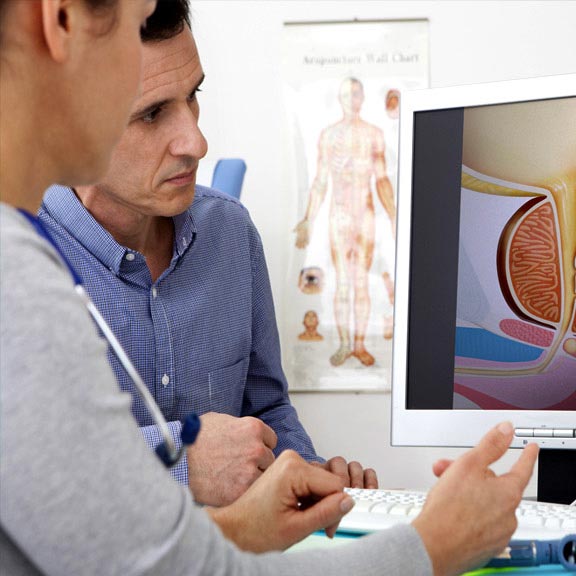
Urology and Men's health
Robotic-assisted urology procedures, including prostate, kidney and bladder surgery, use enhanced visualisation and precision control to help your surgeon operate accurately in complex areas, supporting reduced side effects and faster recovery
Find out more
Gynaecology and Women's health
Robotic-assisted gynaecology procedures, such as hysterectomy and fibroid removal, enable greater precision and a minimally invasive approach, helping reduce pain, scarring and recovery time.
Find out more
General surgery
Robotic-assisted general surgery, including procedures such as gallbladder removal, supports precise, minimally invasive treatment with smaller incisions, reduced discomfort and a quicker return to normal activities.
Find out more
Cardiac surgery
Robotic-assisted cardiac procedures, such as mitral valve repair and coronary artery bypass surgery, enable greater precision and a minimally invasive approach, helping to reduce pain, scarring and recovery time.
Find out moreIs robotic-assisted surgery safe?
Robotic-assisted surgery has been used worldwide for many years across orthopaedics, urology, gynaecological and general surgery.
It is clinically proven to:
- Improve surgical accuracy¹
- Support reduced blood loss in some procedures⁵
- Help protect delicate structures in complex surgery⁶
At Spire Healthcare, robotic-assisted surgery is performed by experienced consultant surgeons who are fully trained in robotic techniques.
Why choose Spire Healthcare?
- Investment in advanced robotic-assisted technology across multiple hospitals
- Experienced consultant surgeons
- Private rooms and personalised care
- Transparent self-pay pricing and finance options
Frequently asked questions
Does the robot perform the surgery?
No, the robot does not perform the surgery on its own. Your consultant surgeon is in full control at all times, using a robotic system to guide precise instruments. The system translates the surgeon’s hand movements into smaller, more controlled movements inside the body, often with a high-definition 3D view
Is robotic-assisted surgery better than traditional surgery?
Robotic-assisted surgery is a type of minimally invasive (keyhole) surgery, and for many procedures it can offer benefits compared to traditional open surgery.
These may include:
- Smaller incisions and reduced scarring
- Less pain after surgery
- Shorter hospital stays
- Faster recovery and return to normal activities
Evidence¹ suggests robotic surgery can also improve surgical precision and, in some cases, reduce complication rates or the need to convert to open surgery. However, it is not always “better” for every patient or procedure. Outcomes can be similar to other minimally invasive techniques, and the most appropriate option depends on your condition and your consultant’s recommendation.
How long does recovery take?
Recovery time varies depending on the type of surgery and your individual health.
Because robotic-assisted procedures are minimally invasive, many patients experience:
- Shorter hospital stays
- Faster initial recovery
- Earlier return to everyday activities
Some patients may go home within a few days, though full recovery can still take several weeks depending on the procedure. Evidence from UK guidance and patient feedback highlights faster recovery and shorter hospital stays as key benefits of robotic surgery
Is robotic-assisted surgery available on private medical insurance?
In many cases, robotic-assisted surgery is covered by private medical insurance, but this depends on:
- Your individual policy
- The procedure being performed
- Your insurer’s approval
We recommend checking directly with your insurer or speaking to our team, who can help guide you through the process
Can I choose robotic-assisted surgery?
You can certainly ask about robotic-assisted surgery as an option.
Whether it is suitable will depend on:
- Your condition and medical history
- The type of procedure required
- Clinical advice from your consultant
- If your chosen hospital offers robotic-assisted surgery for the procedure you require
If appropriate, your consultant will discuss robotic surgery alongside other treatment options so you can make an informed decision together.
Where can I find further information and sources on robotic-assisted surgery and the technologies used at Spire Healthcare?
At Spire Healthcare, we use a range of advanced robotic-assisted technologies to support surgical procedures across multiple specialties. These include systems such as da Vinci, Mako, VELYS, ROSA, CORI, Navio and Aquablation.
Robotic-assisted surgery does not mean surgery is carried out by a robot. Your consultant surgeon remains in full control at all times, using robotic technology to support planning and precision throughout your procedure.
These systems are designed to support minimally invasive techniques and enhance surgical accuracy. [findlaw.com]
How Robotic-assisted surgery may benefit you
Personalised planning: Advanced imaging and planning tools help your surgeon understand your anatomy in detail before your procedure. Depending on the system used, this may include 3D modelling or real-time mapping of your joint or treatment area to support personalised surgical planning and implant positioning. [surgicalskills.co.za], [jnj.com] This tailored approach helps your consultant plan your procedure with precision, based on your individual needs.
Enhanced surgical precision: Robotic-assisted systems are designed to support controlled, precise movements during surgery. They can provide enhanced visualisation, stability and guidance, helping your consultant perform complex procedures with a high level of accuracy. [statsurgic...supply.com], [pmc.ncbi.nlm.nih.gov] This may be particularly beneficial in procedures where precision and alignment are important.
Recovery-focussed approach: Where appropriate, robotic-assisted techniques can support a minimally invasive approach. This may reduce disruption to surrounding tissues, which can support recovery. Many patients experience shorter hospital stays and may return to everyday activities sooner compared with more traditional surgical approaches. [Da Vinci R...ice Claims], [smith-nephew.com]
Smaller incisions: Many robotic-assisted procedures use smaller incisions than traditional open surgery. Smaller incisions may result in less visible scarring and can support a more comfortable recovery. [intuitive.com]
What to expect from robotic-assisted surgery: Robotic-assisted surgery is used across a wide range of procedures, including orthopaedics, urology and general surgery. Each system is designed to support specific types of procedures, and the way the technology is used will vary depending on your treatment. Your consultant will recommend whether robotic-assisted surgery is suitable for you and explain how it will be used in your care.
Important information: Robotic-assisted surgery is performed by a consultant surgeon who remains in full control at all times. Spire Healthcare uses a range of robotic-assisted technologies, including da Vinci, Mako, VELYS, ROSA, CORI, Navio and Aquablation systems. Features and benefits may vary depending on the procedure and technology used.
The potential benefits described on this page are based on clinical studies, NHS guidance and manufacturer information. These describe how the technology is designed to support surgery, but outcomes can vary depending on your individual condition, procedure type and overall health. Not all patients will experience the same results.
While robotic-assisted techniques may support precision and minimally invasive approaches, all surgery carries risks. Your consultant will discuss the potential benefits and risks with you to help you make an informed decision.
Robotic-assisted surgery is an evolving area of medicine, and evidence continues to be gathered to better understand long-term outcomes. [zimmerbiomet.com]
Sources
Independent clinical and NHS guidance
- Evidence generation plan for robot-assisted surgery for soft tissue procedures [zimmerbiomet.com]
- Implementation of robotic-assisted surgery (RAS) in England [medlegal360.com]
- Robot-assisted surgery patient information [intuitive.com]
- Clinical effectiveness of robotic surgery (BMJ Open) [smith-nephew.com]
- COMPARE meta-analysis of robotic surgery outcomes [smith-nephew.com]
- NICE – Robotic-assisted surgery evaluation and evidence generation [nice.org.uk]
- NHS England / GIRFT – Implementation and benefits of robotic surgery [gettingitr...time.co.uk]
- NHS Trust patient information – Kingston & Richmond NHS [kingstonan...ond.nhs.uk]
- Royal College of Surgeons – Robotic surgery guidance [rcseng.ac.uk]
- BMJ Open – Systematic review of robotic vs traditional surgery [bmjopen.bmj.com]
- Annals of Surgery meta-analysis (COMPARE study) [pmc.ncbi.nlm.nih.gov]
- Systematic review (Sensors / PMC) – precision and outcomes [pmc.ncbi.nlm.nih.gov]
Manufacturer information
- da Vinci Robotic Surgical Systems | Intuitive [jnjmedtech.com]
- Mako SmartRobotics | Stryker [surgicalskills.co.za]
- VELYS™ Robotic-Assisted Solution | Johnson & Johnson MedTech [pmc.ncbi.nlm.nih.gov]
- CORI Surgical System | Smith & Nephew [jnj.com]
- NAVIO & CORI robotic systems overview [link.springer.com]
- ROSA® Knee System | Zimmer Biomet [mediplat.gr]

Robotic assisted knee replacement surgery: procedure and benefits
Mr Tim Waters says robotic-assisted surgery allows him to place the knee implant with greater precision than ever before.
View video
Robotic assisted hip replacement surgery: procedure and benefits
Mr Jain explains that robotic-assisted hip replacement allows surgeons to replace hip joints with pinpoint accuracy and precision.
View video
Prostate cancer: from symptoms to robotic-assisted prostate surgery
Around one in eight men in the UK will be diagnosed with prostate cancer, making it currently the most common cancer diagnosis in the UK.
Read more