
Virtual colonoscopy
A scan to examine your large bowel (colon and rectum) and detect bowel cancer and other bowel conditions.
Virtual colonoscopy, also known as computerised tomography (CT) colonography, is a quick, minimally invasive scan that provides a clear view inside your large bowel. It helps detect conditions such as bowel cancer, inflammation, or polyps without the need for sedation.
Sometimes also called
- CT colonography
At a glance
-
Typical hospital stay
Day case -
Procedure duration
30 mins -
Type of anaesthetic
None required -
Available to self-pay?
Yes -
Covered by health insurance?
Yes
Why Spire?
- Fast access to treatment when you need it
- Expert, personalised treatments
- Internationally and nationally renowned consultants
- Clear, simple pricing and flexible payment options
A virtual colonoscopy (also called a computerised tomography colonography) allows doctors to look at your colon (large bowel) to detect polyps and signs of cancer. A computerised tomography (CT) scanner uses X-rays to produce two-dimensional and three-dimensional images of the whole of the colon and rectum.
Why you might need it
Your large bowel is the lower part of your intestines. It absorbs water and nutrients from digested food that passes through it.
A polyp is extra tissue that grows on the inside of the bowel wall. While these are usually harmless, they can sometimes turn into cancer. To be safe, polyps are removed and tested for cancer.
Virtual colonoscopies are routinely done as an out-patient procedure.
If you decide to have your treatment with us, you will be looked after by an experienced multi-disciplinary care team.
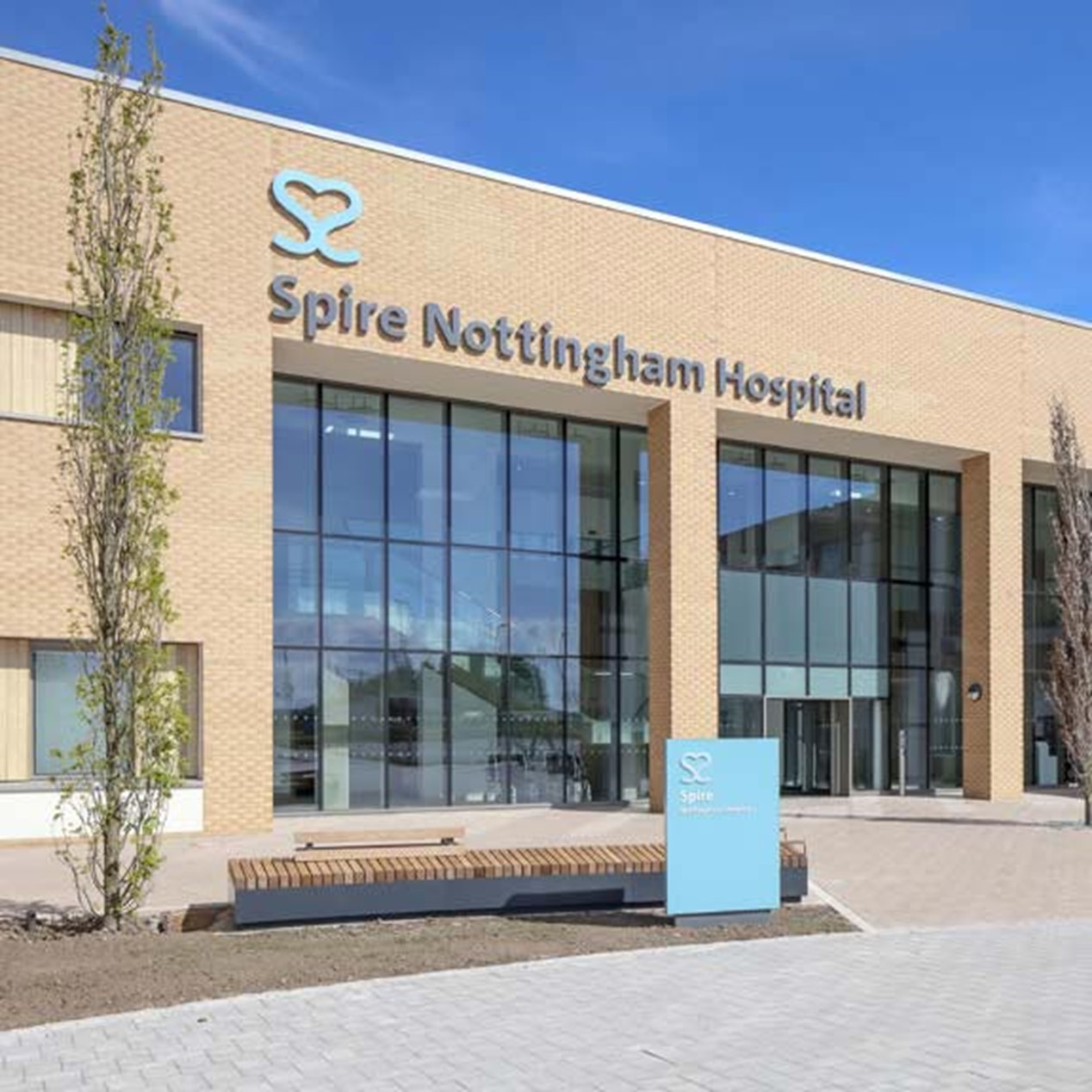
Find a Spire hospital offering this treatment
Who will do it?
Our patients are at the heart of what we do and we want you to be in control of your care.
Our diagnostic investigations are performed by highly qualified, specialist radiographers. Following your scan, a consultant radiologist will report their clinical findings to you.
Our consultants have high standards to meet, often holding specialist NHS posts and delivering expertise in complex sub-specialty surgeries. A number of our consultants have international reputations for their research in their specialised field.
Before your treatment
You will have a formal consultation with a healthcare professional. During this time you will be able to explain your medical history, symptoms and raise any concerns that you might have.
We will also discuss with you whether any further diagnostic tests, such as scans or blood tests, are needed. Any additional costs will be discussed before further tests are carried out.

Preparing for your treatment
We've tried to make your experience with us as easy and relaxed as possible.
For more information on visiting hours, our food, what to pack if you're staying with us, parking and all those other important practicalities, please visit our patient information pages.
Our dedicated team will also give you tailored advice to follow in the run up to your visit.
The procedure
We understand that having a test can potentially be a time of anxiety and worry. Our experienced and caring medical staff will be there for you, holding your hand, every step of the way.
Your scan will be performed by a skilled technician, called a radiographer. The procedure usually takes up to 20 minutes.
During the procedure, we may give you an injection of a muscle relaxant to help relax the muscles of your bowel wall. You may also have an injection of contrast at the same time.
The scanner is a large machine with a hole in the centre (like a ring). Only the part of your body inside the ring can be scanned. You will be asked to lie on a table that can slide in or out of the ring.
A thin tube will be placed into your rectum. Carbon dioxide or air will be passed into your colon to make the bowel wall easier to see. When this happens, you may briefly feel pains similar to trapped wind and the urge to go to the toilet but, as the colon is empty, this won't be possible.
The table will be positioned so that the middle part of your body is lying in the centre of the scanner. The X-ray unit will rotate around you to help produce images from all directions. The scanner is operated from behind a window. Your radiologist will be able to see, hear, and speak to you throughout the procedure.
You will usually have scans taken in two positions - one with you lying on your back and a second scan with you lying on your stomach. It can take several minutes for each image to form and it’s important to lie very still during the process. At certain points during the scan you may be asked to hold your breath for a couple of seconds.
Aftercare
A virtual colonoscopy is routinely done as an out-patient procedure, so you won't need to stay in hospital after the test.
Your radiologist will examine the images and send a report to the doctor who requested your test. The report can take a few days to reach your doctor. Before you go home, please ask your radiologist when you can expect to get your results.
On rare occasions, complications can occur with a virtual colonoscopy. If you experience any of these symptoms – bleeding, continued abdominal pain or bloating – call us straight away, as they may be a sign the colon has been damaged or perforated during the procedure. In rare cases, it's possible to have an allergic reaction to the contrast injection. If you experience any itching or difficulty in breathing tell your radiologist immediately. Medicines are available to treat any allergic reaction.
We will talk to you about the possible risks and complications of having this procedure and how they apply to you.
If you have any questions or concerns, we're here to help.
Why choose Spire?
We are committed to delivering excellent individual care and customer service across our network of hospitals, clinics and specialist care centres around the UK. Our dedicated and highly trained team aim to achieve consistently excellent results. For us it's more than just treating patients, it's about looking after people.
Important to note
The treatment described on this page may be adapted to meet your individual needs, so it's important to follow your healthcare professional's advice and raise any questions that you may have with them.
What is a virtual colonoscopy?
A virtual colonoscopy is a test that uses a CT scanner and X-rays to produce images of the large bowel and look for any abnormalities inside your abdomen and bowel.
Why you might need a virtual colonoscopy
Your large bowel is the lower part of your intestines. It absorbs water and nutrients from digested food that passes through it. If you have unexplained changes in your bowel habits, anal bleeding or persistent stomach pain, you may have a virtual colonoscopy to check for signs of bowel cancer.
The procedure provides a clear picture of what’s going on inside your large bowel, so that your doctor can identify any changes.
They can also check for other conditions like:
- Diverticular disease
- Inflammation
- Polyps (non-cancerous growths)
A polyp is extra tissue that grows inside your bowel wall. While these are usually harmless, they can sometimes turn into cancer. To be safe, polyps are removed and tested for cancer.
Finding any issues early means that your healthcare team can decide the next steps as soon as possible. You may need further treatment, monitoring, or reassurance that nothing serious is happening.
Is a virtual colonoscopy right for you?
Your doctor may recommend a virtual colonoscopy to check inside your large intestine for any abnormalities, such as growths, inflammation or any other changes that might occur.
A virtual colonoscopy may be more suitable than a traditional colonoscopy, where a small camera is inserted into the rectum, for a number of reasons. For example, if you:
- Are at risk of bleeding or other complications
- Don’t want to be sedated
- Have a blockage in your bowel
- Need to drive yourself home after the procedure
A virtual colonoscopy may not be suitable if you are pregnant as it uses X-rays, which could harm the unborn baby. It may also not be suitable for you if you have:
- A higher than average risk of colon cancer
- A history or family history of colon cancer
- A history or family history of polyps
- Acute diverticulitis
An active flare-up of bowel disease - Significant abdominal pain
Radiation exposure carries a higher risk for children and young adults, so virtual colonoscopy is not generally recommended for this age group.
Find your nearest Spire hospital
Many of our hospitals offer private virtual colonoscopy (CT colonography), performed by experienced radiologists using advanced imaging technology.
Events
Free Mini Vascular Monthly Consultations with Mr Oluwole
Free mini consultation with Consultant Vascular and Endovascular Surgeon, Mr Akin Oluwole
Learn more
Free mini consults with Consultant Gynaecologist, Mr Georgios Theophilou
Book a free mini consult with Mr Theophilou, and get another set closer to understanding and managing your Endometriosis
Learn more
Free Online Parents Paediatric ENT Event with Consultant Dr Huw Jones
Parents, join our free online event with Dr Huw Jones to learn about tonsillitis, sleep apnoea, ear infections, hearing loss and nosebleeds
Learn more
How the procedure works
You’ll have your virtual colonoscopy in the hospital’s imaging department, using a CT scanner. This will take images of your bowel to create a detailed 3D model of your colon — the radiologist will use this to examine your bowel as if a camera were travelling through it.
The scan will also create 2D images of your colon, abdomen and pelvis, which can help detect any other issues that may be causing your symptoms.
What to expect during a virtual colonoscopy
Before the procedure
You may be asked to follow a low-fibre or restricted diet in the days leading up to the scan. Your admissions letter will explain whether you need to avoid certain foods or only drink clear fluids.
You may need to stop taking medications or supplements, such as iron tablets, in the run-up to your scan. Your care team will advise you whether you need to pause or adjust your dose.
If you have diabetes, your doctor will give you specific advice on how to prepare, especially if you take insulin or other medicines that affect your blood sugar.
How to prepare for the surgery
To capture the clearest images, your bowel will need to be as clean and empty as possible. You’ll be given an iodine-based liquid to drink the day before your procedure. This acts as both a laxative and a dye.
Who will be involved?
A highly-skilled radiographer will carry out your scan. They will typically not be in the room with you while the scan is running, however, they will be able to communicate with you through an intercom.
The procedure
How long does a virtual colonoscopy take?
A virtual colonoscopy typically takes less than 30 minutes.
What happens during the scan?
You’ll change into a hospital gown and lie down on the scanning table. Your healthcare team will gently insert a thin, flexible tube into your rectum and pass carbon dioxide through it to slightly inflate your bowel.
This allows the CT scanner to take clear and detailed images of the lining of your bowel by smoothing out any folds or wrinkles that may hide polyps from view. The gas may cause a sensation similar to trapped wind or the urge to go to the toilet but, as the colon is empty, this won't be possible.
The scanner table will move slowly through the CT scanner while it takes pictures of your bowel. You may have to change positions a few times so that the scanner can get images of your bowel from all angles. You’ll have to lie perfectly still as the scanner takes the images, as it can take several minutes to generate each picture. You may be asked to hold your breath for a couple of seconds during the scan.
What happens immediately after your scan
When your radiologist has all the pictures they need, your care team will gently remove the tube inflating your bowel. You’ll be taken into a recovery room that has a toilet and your clothes so you can get dressed.
The gas used to inflate your bowel may cause mild bloating or discomfort, but this should resolve when you use the toilet or pass gas naturally.
You can usually go home straight after the procedure if your care team is happy for you to do so.
Your results
In most cases, your radiologist will complete their report within 5 working days. Your results will be sent to the doctor who referred you for the scan, who will arrange a follow-up appointment to talk you through them. They will explain what the scan revealed and the best treatment options for you, if necessary.
Get fast access to our services with inSpire health insurance
With inSpire health insurance you'll get fast access to world-class experts at Spire Healthcare, including GPs and physiotherapists.

Risks and complications
A virtual colonoscopy is generally considered a very safe procedure and has fewer associated risks than a traditional colonoscopy (also called an endoscopy). You may experience discomfort and bloating from having your bowel inflated. You may also feel faint when you first sit up after having the procedure.
In fewer than 1 in 10,000 people, inflating the bowel with carbon dioxide causes an injury.
Alternatives to virtual colonoscopy
If a virtual colonoscopy isn’t suitable for you, you may be offered a standard colonoscopy instead. This is also called an endoscopy of the bowel. It involves passing a long, flexible tube with a camera on the end through your colon and moving it carefully around your bowel.
This doesn’t use X-rays, but is more invasive than a virtual colonoscopy, and usually needs sedation to keep you comfortable. However, an advantage of this procedure is that doctors can take biopsies or remove polyps during your colonoscopy, which they can’t do with a virtual one.
Capsule endoscopy
This involves swallowing a tiny disposable camera inside a capsule the size of a large vitamin pill. As it travels through your bowel, it takes pictures that are transmitted wirelessly to a small recorder for your radiologist to review. This is a relatively new technology and is only offered at some hospitals.
Frequently asked questions
Does the scan involve radiation?
Yes, a virtual colonoscopy involves a small amount of radiation, as it uses X-rays to take detailed images of the inside of your bowels. The risk from this exposure is very low. For most people, the benefits of detecting or ruling out bowel problems far outweigh the risks.
Will I need sedation or anaesthesia?
No, you won’t typically need sedation or anaesthesia for a virtual colonoscopy. This is one of the main differences compared with a standard colonoscopy, which often requires sedation to keep you comfortable.
What if something abnormal is found?
Your consultant may recommend further investigation if your virtual colonoscopy shows abnormalities such as polyps or unusual growths. In many cases, this means having a standard colonoscopy, as it allows your healthcare team to take biopsies (tissue samples) or remove small polyps during the procedure.
What should I eat before a colonoscopy?
You’ll be given a leaflet containing information about what foods to eat and what to avoid before your virtual colonoscopy. Follow these instructions carefully to make sure the scan can go ahead as planned. If you have any additional questions, speak with your medical team for further advice.
How soon will I get my results?
After your scan, the images are carefully reviewed by a radiologist, a doctor who specialises in understanding CT scans. They will prepare a detailed report and send it to the doctor who referred you for the test. This typically takes 5 days unless the radiologist needs a second opinion from another specialist.
The treatment described on this page may be adapted to meet your individual needs, so it's important to follow your healthcare professional's advice and raise any questions that you may have with them.