

Inner knee pain, also known as medial knee pain, refers to pain along the inner sides of your knees ie the left side of your right knee and the right side of your left knee.
Inner knee pain symptoms
Inner knee pain can occur across or just below the inner side of your knee, and can be immediate or delayed. Symptoms vary depending on the underlying cause of your inner knee pain but can include:
- A popping noise alongside sudden pain
- Locking or difficulty straightening your leg after an injury — if your knee becomes locked, it may click or get stuck in a certain position
- Feeling as if your knee is going to give way
- Immediate or delayed swelling
- Knee ache that gets worse on activity eg climbing stairs, running or squatting
- Knee ache after bending your knee or sitting for a long time, or sleeping on your side with your knees together ie one knee pressing down against the other
What causes pain on the inner side of the knee?
Inner knee pain is often caused by an injury, such as a fall, sports injury or overuse. However, there are also diseases that can cause inner knee pain.
Adults, particularly those aged over 60, are most at risk of inner knee pain, although it can also occur in children and adolescents.
Most common inner knee pain causes
In children the most common causes of inner knee pain are:
- Osgood-Schlatter disease
- Patellar subluxation
- Patellar tendonitis — also known as jumper’s knee
In adults, there are a range of other common causes of inner knee pain, including:
Osteoarthritis
Osteoarthritis is one of the most common forms of arthritis, which causes the cartilage and bones in your joints to break down. If osteoarthritis affects your knees, you may find that pain worsens throughout the day because of the pressure applied to your knee when climbing up and down the stairs, walking and sitting.
Rheumatoid arthritis
Rheumatoid arthritis is a chronic (long-term) inflammatory disease where your body’s immune system mistakenly attacks the tissues in your joints. If rheumatoid arthritis affects your knees, you may find that pain gets better through the day as the inflammation and stiffness reduces.
Medial collateral ligament (MCL) injury
The medial collateral ligament runs along the outside of your inner knee and stabilises it. If this ligament is overstretched, you can develop an MCL sprain, or a partial or full tear. MCL injuries usually occur when playing contact sports where there is a lot of twisting and turning of your knee joints. Symptoms include:
- A popping noise on injury followed by sudden pain
- Feeling unsteady when standing or walking
- Locking of your knees
- Swelling
Medial meniscus injury
The medial meniscus cartilage acts as a cushion between the bones in your knee joint. Each of your knees has two menisci that sit between your thigh bone and shin bone. Either meniscus can become stained or torn. This most commonly happens during sports when your knee twists or turns, or is put under pressure. There are four main types of medial meniscus tears:
- Bucket handle tear
- Degenerative tear
- Flap tear
- Radial tear
Symptoms of a medial meniscus tear include:
- Feeling unsteady when standing or walking
- Locking of your knee
- Stiffness
- Sudden, sharp pain when twisting your knee
Pes anserine bursitis
Your knees contain fluid-filled sacs called bursae, which help reduce friction when your knee moves. These bursae sit between your MCL and three tendons, and are called the pes anserinus.
Pes anserine bursitis occurs when the pes anserinus is overused or irritated. This causes the bursae to produce excess fluid and swell, which applies pressure in your knee joint that causes inflammation.
Pes anserine bursitis can be caused by:
- A medial meniscus tear
- Being overweight or obese
- Osteoarthritis
- Repeatedly turning your knee outwards when standing or walking
- Tight hamstrings
Medial plica irritation
Your knee joint is covered by a thin lining, which has folds in it called plica — the medial plica lines your inner knee. When the medial plica becomes irritated through overuse (eg repeatedly flexing your knee), it thickens and can get stuck between the bones in your knees. Symptoms include:
- A cracking sound
- Dull inner knee pain
- Locking of your knees
Knee contusion
A direct impact to your knee (eg during a fall or by a blunt object hitting your knee) can bruise your kneecap (patella).
In addition to inner knee pain, symptoms include
- Bruised skin
- Difficulty bending your knee
- Stiffness
- Swelling
Diagnosis of inner knee pain
Mild knee injuries do not always need to be seen by a doctor or physiotherapist. However, you should seek medical attention if you:
- Are still in pain after three days
- Can’t put weight on your affected leg
- Have a bluish discoloration, numbness, pain, swelling or tingling in your calf (back of your affected leg)
- Have a fever
- Have severe pain even when your affected leg is not bearing any weight
You should also see a doctor if your knee:
- Clicks, locks or gives way
- Feels hot
- Is deformed, red or swollen
Your doctor will perform a physical examination of your knee, and ask you questions about your symptoms and medical history. This will include:
- How active you are
- When your pain started and what you were doing at the time
- Whether you can think of any activity or injury that could be causing your symptoms
- Whether your pain comes and goes
If needed, your doctor may refer you for an X-ray or MRI scan.
If your doctor thinks the cartilage or ligaments in your knee are damaged, they may recommend a procedure to look inside your knee called a knee arthroscopy. This is a type of keyhole surgery, which means it involves making small cuts into your body, in this case into your knee, and inserting a thin, telescope-like tube with a camera and a light on the end (arthroscope). Your surgeon will then be able to see inside your knee and in some cases, may be able to repair or remove damaged tissue during this procedure.
How do you treat inner knee pain?
Treatment for inner knee pain varies depending on the underlying cause. Many knee injuries can be treated at home through rest and pain relief. However, if your pain lasts more than three days or gets worse, you should see a doctor.
Depending on the underlying cause, your doctor may recommend:
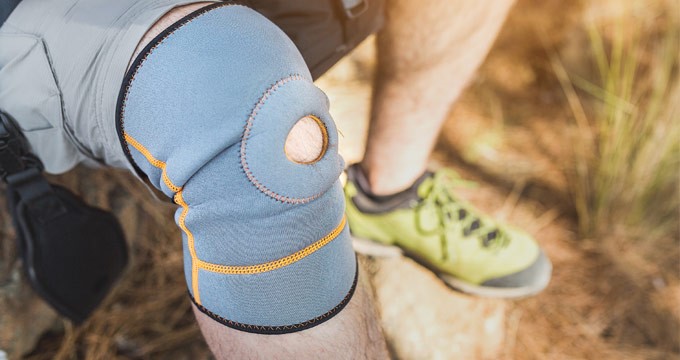
- An assistive device eg wearing a knee brace while playing sports or for everyday activities
- Knee arthroscopy surgery to treat a meniscus tear
- Physiotherapy — this may include stretching and specific exercises, as well as ultrasound therapy
- Steroid injections to treat pes anserine bursitis
Managing inner knee pain
If your knee pain is caused by an injury, immediately afterward, you should avoid bending or twisting your knee, rest your leg, take over-the-counter painkillers and apply an ice pack to reduce swelling. You may need crutches if your affected leg can’t bear any weight.
Managing inner knee pain at home
Mild knee pain can often be treated at home by taking over-the-counter painkillers (eg paracetamol) and anti-inflammatory medication (eg ibuprofen), resting your leg, applying an ice pack for 20 minutes three to four times a day and/or wrapping your knee in elastic compression bandages.
When resting your leg, try to elevate it to the same level or slightly higher than the level of your knee. You can do this by placing pillows under your knee.
Also, make sure you avoid the activity causing your knee pain and use crutches if your affected leg can’t bear any weight.
If your inner knee pain lasts longer than three days even after these treatments or if your pain gets worse, see a doctor.
Exercises for inner knee pain
Inner knee pain can be treated and prevented by strengthening the muscles around your knee, particularly your quadriceps and hamstrings. Exercises to do this include leg extensions, leg presses, mini-squats, straight leg lifts, stationary or recumbent cycling, walking or running using an elliptical machine, and swimming.
You should speak to your doctor or a physiotherapist before starting any exercise regime with inner knee pain. If any of these exercises worsen your pain, stop.
Make sure that whenever you exercise, you warm up and cool down properly, and stretch your muscles, particularly your quadriceps and hamstrings.
Inner knee pain FAQs
Why do I have pain on the inside of my knee when walking?
You may have damaged the cartilage, ligaments or other soft tissues in your knee through injury or overuse. You may also have inner knee pain when walking if you have osteoarthritis.
Why do I have pain on the side of my kneecap when kneeling?
You may have prepatellar bursitis, which is caused by overuse ie excessive kneeling or bending. This causes the fluid-filled cushions in your knee (bursae) to swell and become inflamed.
What causes pain on the inside of the knee with no swelling?
Inner knee pain is usually but not always accompanied by swelling. Sometimes swelling can go down but you may still be in some pain. There are a range of causes, including injury or overuse of your knees, or conditions such as osteoarthritis.
What causes inside knee pain during or after running?
Inner knee pain during or after running can be caused by osteoarthritis, overuse or injuries such as a meniscal tear, medial collateral ligament injury or bursitis.
