
What is bursitis of the knee?
Knee bursitis affects the bursae in your knee. These are small, fluid-filled sacs in your knee joint that act as cushions. By reducing friction between your bones and surrounding soft tissues, bursae enable the smooth movement of your knee.
Knee bursitis occurs when the linings of the bursae become irritated and inflamed. This causes them to produce excess fluid, which makes the bursae swell and push against surrounding tissues.
There are different types of knee bursitis depending on which bursa is inflamed — most often it is the bursa that lies over your kneecap (prepatellar bursitis) or the bursa that sits at the back of your knee, underneath your knee joint (pes anserine bursitis).
Prepatellar bursitis
Prepatellar bursitis occurs when your prepatellar bursa becomes inflamed — this is the bursa that sits on top of your kneecap (patella). You are at greater risk of developing prepatellar bursitis if you work in certain professions, such as carpet laying, gardening, mining, plumbing and roofing. This is because prepatellar bursitis is often caused by overuse of your knee joint, specifically frequent and/or prolonged kneeling.
Other causes of prepatellar bursitis include injury, such as a direct blow to your knee, or an infection with bacteria after a cut, scrape or insect bite.
You are also at greater risk of developing prepatellar bursitis if you have rheumatoid arthritis or gout.
Infrapatellar bursitis
Infrapatellar bursitis occurs when one of your infrapatellar bursae become inflamed. There are two infrapatellar bursae:
- The deep infrapatellar bursa — this lies below the level of your kneecap and above a knob-like protrusion of your shinbone called the tibial tubercle; when inflamed it causes deep infrapatellar bursitis
- The subcutaneous infrapatellar bursa — this also lies below the level of your kneecap and above the tibial tubercle but is more superficial, sitting just underneath your skin; when inflamed it causes superficial infrapatellar bursitis, which is also known as clergyman’s knee
Superficial infrapatellar bursitis causes swelling below your kneecap that your doctor will be able to feel when carrying out a physical examination of your knee.
Deep infrapatellar bursitis causes a triangular collection of fluid to build up behind your patellar tendon, which connects your kneecap to your shinbone. In adolescents, symptoms of deep infrapatellar bursitis can overlap with Osgood-Schlatter disease. However, in Osgood-Schlatter disease it is the patellar tendon that is inflamed, not the infrapatellar bursae.
Suprapatellar bursitis
Suprapatellar bursitis occurs when your suprapatellar bursa becomes inflamed — this bursa lies above the level of your kneecap, between your quadriceps tendon and your thigh bone. Suprapatellar bursitis often causes visible swelling just above your knee joint on the front of your thigh.
Pes anserine bursitis
Pes anserine bursitis occurs when the pes anserine bursa becomes inflamed — this bursa lies between your shinbone and the three tendons that connect to your hamstring muscle, on the inner side of your knee. Pes anserine bursitis is often caused by overuse ie repetitive movement and often occurs in runners.
Baker's cyst
A Baker's cyst occurs when synovial fluid collects behind your knee. Synovial fluid is a lubricating fluid that helps your knee move smoothly. However, certain knee problems, such as osteoarthritis, can cause too much synovial fluid to be produced, which builds up to form a cyst. This usually causes swelling of the gastrocnemius semimembranosus bursa, which lies behind your knee joint.

Symptoms of knee bursitis
Knee bursitis symptoms vary depending on which bursa is inflamed. Symptoms usually come on gradually and get worse due to overuse and prolonged irritation. However, if your knee bursitis is caused by a sudden injury (eg a direct blow to your knee), you may experience sudden knee bursitis pain.
Knee bursitis often causes tenderness and swelling of your knee. Your knee may also feel warm to the touch.
Symptoms of prepatellar bursitis
- Pain during or after activity — prepatellar bursitis does not usually cause pain at night or when you are resting your knee
- Swelling at the front of your knee ie the kneecap
- Tenderness and warmth on touching your knee
If your prepatellar bursitis is caused by an infection, you may also have a fever and redness in your knee area.
Symptoms of infrapatellar bursitis
- Pain at the front of your knee just below your kneecap
- Swelling at the front of your knee just below your kneecap ie over your infrapatellar bursa
These symptoms are similar to those that occur with patellar tendonitis, also known as jumper’s knee.
Symptoms of suprapatellar bursitis
Symptoms occur at the front of your knee above your kneecap and include:
- Dull, aching pain
- Swelling, tenderness and redness
- Warmth on touch
You may also have a reduced range of motion. Symptoms usually come on gradually and can occur when you are at rest and worsen when you kneel, jump or run.
Symptoms of pes anserine bursitis
Pes anserine bursitis can cause pain, swelling and tenderness on the inside of your lower leg, around 5-7cm below your knee. However, pain may spread to the front of your knee and down your lower leg.
Symptoms of a Baker's cyst
Baker’s cyst symptoms include:
- Knee pain — this doesn’t always occur; Baker’s cysts can be painless
- Stiffness and reduced range of motion of your knee
- Swelling at the back of your knee and occasionally in your lower leg
Your symptoms may get worse after activity or standing for a prolonged period of time.
Causes of knee bursitis
Risk factors for knee bursitis include:
- Arthritis in your knee — this includes gout, osteoarthritis and rheumatoid arthritis
- Bacterial infection of your knee or nearby tissues
- Being overweight or obese — obese women who also have osteoarthritis often develop pes anserine bursitis
- Injury ie a direct blow to your knee — taking part in certain sports (eg football, rugby, volleyball and wrestling) puts you at greater risk of such injuries
- Overuse or strenuous activity — pes anserine bursitis is more common in runners
- Prolonged and frequent kneeling, particularly on hard surfaces — if you work in a profession that involves kneeling, such as carpet laying, gardening or plumbing, you are at greater risk of knee bursitis
Knee bursitis diagnosis
If you are concerned that you may have knee bursitis, see your GP. They can often give you a diagnosis of knee bursitis after discussing your medical history and carrying out a physical examination of your knee.
They will usually examine both of your knees. They will gently press against your knee to find the exact location of your pain and check for swelling, tenderness and warmth. They will also look for signs of infection, such as redness.
Your GP may ask you to move your legs to check your range of motion and whether movement causes you pain.
Other conditions can produce symptoms similar to knee bursitis, so they may recommend further tests to rule out other conditions or injuries. These tests include:
- An X-ray — a knee X-ray can detect damage to your bones and conditions such as arthritis
- MRI scan — a knee MRI scan can detect damage to your soft tissues, such as your tendons and ligaments
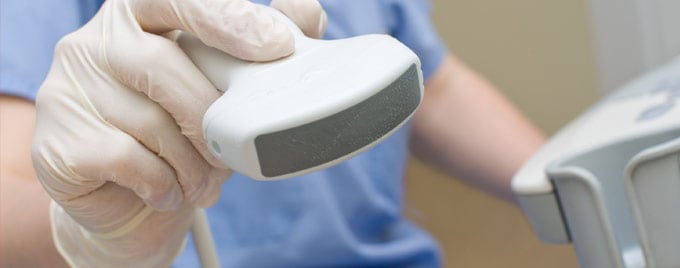
- Ultrasound scan — this can help detect the exact location of any swelling
Knee bursitis treatment
Knee bursitis often gets better on its own, so initial treatments focus on reducing your symptoms. The best treatment for knee bursitis will depend on the underlying cause and which of your bursae are inflamed.
If your knee bursitis is caused by a bacterial infection, your doctor will prescribe a course of antibiotics.
Non-surgical treatments for knee bursitis
- Applying ice packs — you can do this several times a day for 20 minutes at a time
- Elevating your knee on a pillow — this helps reduce swelling
- Over-the-counter painkillers eg aspirin, ibuprofen and naproxen
- Physiotherapy — this can reduce knee pain and stiffness by improving the flexibility of your knee and the strength of the muscles that support your knee; physiotherapy can also reduce your chances of developing knee bursitis in the future
- Resting your knee
- Wearing compression knee sleeves to reduce swelling and/or protective knee braces — protective knee braces are useful if your work or hobbies involve kneeling frequently
Surgical treatments for knee bursitis
If non-surgical treatments aren’t effective in relieving your knee bursitis symptoms, your doctor may recommend more invasive treatment. This may include:
- Aspiration — a needle and syringe are used to drain the fluid in your inflamed bursa; side effects of aspiration include short-term pain and swelling; after aspiration, you may need to wear a knee immobiliser for a short period of time to reduce any swelling
- Corticosteroid injection — a corticosteroid drug is injected into the inflamed bursa, which will quickly reduce the inflammation; you may have pain at the injection site for several days; this treatment is only recommended if your bursitis persists despite trying other treatments
- Surgery — if you have severe, chronic (long-term) bursitis, your doctor may recommend surgery to remove the inflamed bursa
Knee bursitis recovery
The recovery time for knee bursitis will depend on the particular treatment you receive and the severity of your condition.
With physiotherapy to stretch and strengthen your knee muscles, alongside controlling any swelling, you may see improvements in two to eight weeks.
Aspiration doesn’t need any recovery aside from taking painkillers after your procedure.
A corticosteroid injection usually takes several days to show improvements as your inflammation reduces.
Knee bursitis prevention
You can reduce your risk of knee bursitis by:
- Avoiding squatting or bending your knees too much — this puts extra strain on your knees
- Maintaining a healthy weight — being overweight or obese puts extra strain on your knees and therefore increases your risk of knee bursitis
- Taking regular breaks and stretching when performing tasks on your knees
- Wearing protective knee braces or pads if your work involves kneeling for prolonged periods of time or if you play contact sports where your knees are at risk of a direct blow
Knee bursitis Q&A
What does bursitis in the knee feel like?
Your knee may feel warm and tender to the touch. You may also have a dull, aching pain in your knee that worsens with activity. Symptoms usually come on gradually over time, however, if your bursitis is caused by a sudden injury, your symptoms may come on quickly.
Does knee bursitis go away?
Knee bursitis often gets better without medical treatment after resting your knee, avoiding the activities that worsen your symptoms and performing physiotherapy exercises to strengthen and stretch your knee muscles.
What causes knee bursitis to flare up?
Knee bursitis often flares up due to activities that put strain on your knees eg kneeling, bending your knees or taking part in certain sports. Depending on the type of knee bursitis you have, you may also experience more pain if you stand up for prolonged periods of time.
What happens if knee bursitis is left untreated?
Left untreated, knee bursitis can cause chronic (long-term) pain and muscle wasting as your knee becomes less mobile. If you have septic knee bursitis, the infection can spread elsewhere, which can become life-threatening.
Can you walk with knee bursitis?
In most cases, you can walk with knee bursitis, although you may experience some pain. However, in severe cases of knee bursitis, your range of movement may be so restricted and/or your pain so severe, that you can’t walk.
Should I treat knee bursitis by wrapping the affected knee?
Wearing a knee wrap or compression knee sleeve can help reduce swelling caused by knee bursitis. However, make sure you select the correct size to avoid reducing the blood supply to your knee or pinching a nerve.
Can I drain knee bursitis myself?
No, you should not drain your inflamed knee bursa yourself. You may do more damage and put yourself at risk of developing an infection. If you are concerned about your knee bursitis, see your GP. Depending on your symptoms, they may recommend aspiration (draining of the bursa), which will be carried out by a medical professional.
How painful is knee bursitis?
This depends on the type of knee bursitis you have eg a Baker’s cyst is often painless, while severe bursitis can prevent you from walking due to the pain and stiffness.
How long does knee bursitis last?
This depends on the treatment you receive and the severity of your knee bursitis. In some cases, rest, painkillers and physiotherapy together can resolve knee bursitis in two to eight weeks. In cases where more invasive treatment is needed (eg aspiration, steroid injection), your recovery time may be quicker.
