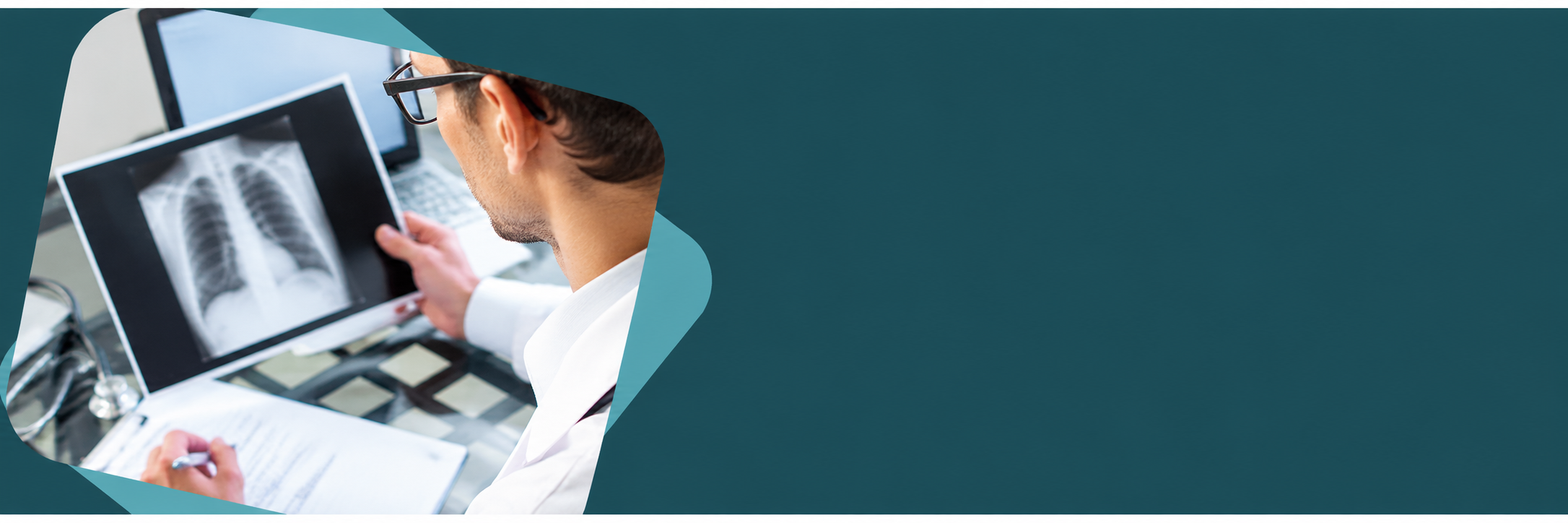

The third most common cancer in the UK is lung cancer, with over 50,000 new cases diagnosed every year. Although it more commonly affects adults aged over 50, it’s increasingly affecting younger adults.
Here, I’ll answer some of the most common questions about lung cancer that I come across as a Consultant Thoracic Surgeon.
What are the most common symptoms of lung cancer?
Lung cancer rarely has any symptoms in the early stages. By the time symptoms develop, the cancer is usually advanced. Common symptoms of lung cancer include:
- A persistent cough
- Breathlessness
- Fatigue
- Frequent chest infections or a chest infection that is not getting better
Although coughing up blood is a symptom of lung cancer, it’s less common. Similarly chest or shoulder pain can occur in lung cancer but are not common symptoms.
In more advanced stages, you may experience unintentional weight loss or develop a hoarse voice.
What is the main risk factor for lung cancer?
Smoking is the main risk factor for lung cancer. Around 7 in 10 cases of lung cancer are linked to people who smoke or people who are frequently exposed to second-hand smoke (passive smoking), for example, living with someone who smokes inside the house.
Past exposure to passive smoking also increases your risk of lung cancer (eg living with someone who smoked in the house when you were a child).
If you smoked when you were younger but have since quit, you may still have a higher risk of developing lung cancer than someone who has never smoked. However, your risk decreases over time after quitting, particularly compared with someone who continues to smoke.
Can non-smokers get lung cancer?
Yes, non-smokers can develop lung cancer. Around 15 in 100 cases of lung cancer occur in never-smokers (people who have never smoked in their life). Common risk factors for lung cancer not linked to smoking include:
- Exposure to environmental pollutants — this includes exposure to high levels of radon gas in certain parts of the UK, and indoor air pollution
- Occupational exposure to air pollutants — this includes asbestos, silica, diesel exhaust, and heavy metals
- Genetics — genetic faults (mutations) in certain genes increase your risk
- Family history — this includes a combination of genetics and shared exposure to environments with air pollution
Does vaping increase your risk of lung cancer?
There is currently not enough long-term evidence for the effects of vaping on lung cancer risk. Current evidence suggests that vaping may be less harmful than smoking. However, a large research study has shown that vaping after quitting smoking may diminish the protective effects of quitting smoking on lung cancer risk.
Who can take part in lung cancer screening?
In 2019, the NHS rolled out a national lung cancer screening programme. It is not yet available in every part of the country, but you can check if it’s available in your area here. If lung cancer screening is available in your area, you may be offered screening if you’re aged between 55 and 74, registered with a GP and currently or previously smoked.
If you’re eligible, a healthcare professional will ask you about your health, breathing, past and current lifestyle, medical history and family history. This will help them identify your risk of lung cancer.
If this assessment reveals problems with your breathing or lung health, you’ll be referred to your GP. They will discuss what next steps are needed. If the assessment reveals that you’re at a higher risk of developing lung cancer, you will be referred for a lung CT scan.
Lung cancer screening has had a dramatic effect on the early diagnosis of lung cancer — early diagnosis significantly improves survival. In the first 5 years of the screening programme, over 7,000 cases of lung cancer were detected and around three-quarters of them were at an early stage.
How is lung cancer investigated and diagnosed?
Symptoms that may be due to lung cancer are first investigated by taking a detailed medical history. Your doctor will ask you about your symptoms, family history and about your current and past lifestyle. This will include questions about your smoking history, including passive smoking, as well as environmental and occupational exposure to air pollutants.
They will also listen to your chest using a stethoscope and may refer you for a chest X-ray. A chest X-ray can detect some, but not all, cases of lung cancer. Certain tumours may be hidden by the heart or too small to clearly see on an X-ray. You may, therefore, need a lung CT scan (computed tomography) to get a clearer, more detailed view of your lung tissue.
A lung CT scan also uses X-rays but alongside computer technology to create detailed cross-sectional images of your lungs. Although a lung CT scan uses more radiation than a chest X-ray, the amount of radiation you’re exposed to is still relatively low. A low-dose lung CT scan is roughly equivalent to the amount of radiation you are exposed to in the environment over 6 months.
If an abnormality is found on your lung CT scan, your doctor may recommend that you have a PET scan (position emission tomography). A PET scan involves injecting a small, safe amount of radioactive chemical (radiotracer) into your body before imaging your lungs in a CT scanner.
The radiotracer mimics glucose, which cells use as an energy source. As cancer cells use a lot of energy, they absorb more of this chemical and appear brighter on a PET scan. This provides more evidence to support a diagnosis of cancer. However, other diseases also appear bright (eg infections), so the only definitive way to diagnose lung cancer is to collect a tissue sample (biopsy).
Depending on the results of your PET scan, your doctor may recommend a needle biopsy guided by a CT scan. This is where a tissue sample is collected using a needle inserted through your chest.
If a needle biopsy is not suitable, you may have a bronchoscopy to collect a tissue sample. This involves passing a thin, flexible tube with a light and a camera on the end (bronchoscope) via your nose or mouth into your throat and lungs. A biopsy is then collected through the bronchoscope.
The tissue sample is analysed under a microscope in a lab to confirm whether or not it’s cancer.
What are the main types of lung cancer?
The 2 main types of lung cancer are small cell lung cancer (SCLC) and non-small cell lung cancer (NSCLC). NSCLC is the most common type, accounting for 85 out of 100 cases of lung cancer.
There are 2 main types of NSCLC: the most common type is adenocarcinoma and the less common type is squamous cell carcinoma.
Smoking is strongly linked to small cell lung cancer and the squamous cell type of non-small cell lung cancer.
What are the stages of lung cancer?
There are several different ways of staging lung cancer but the most common way of staging is from stage 1 to stage 4:
- Stage 1 — early stage lung cancer where the tumour is small, less than 4 cm, and the cancer has not spread to the lymph nodes
- Stage 2 — the tumour may be slightly larger, sometimes bigger than 4 cm, or there may be limited spread to lymph nodes
- Stage 3 — the tumour or tumours are larger, sometimes over 7 cm and/or the cancer has spread into the lymph nodes
- Stage 4 — the cancer has spread from the lungs and lymph nodes into other parts of the body
How is lung cancer treated?
Treatment for lung cancer depends on the stage, aggressiveness and spread of the cancer, whether the cancer can be removed with surgery, and your general health and fitness.
In the early stages (stages 1 and 2) and in certain cases of stage 3 lung cancer, surgery is recommended to remove the tumour(s). Surgery offers the best chance of long-term survival when it is possible.
In some cases of early stage lung cancer, targeted radiotherapy called stereotactic ablative radiotherapy (SABR) may be recommended. It involves delivering high-dose radiation to a small, targeted area.
Stages 3 and 4 of lung cancer are usually managed with systemic treatment, such as chemotherapy and/or immunotherapy. Surgery may also be recommended at stage 3 but is not usually recommended at stage 4.
Cancer investigations and treatments
We offer fast access to private cancer tests and scans, alongside expert advice and personalised treatment options from our specialist consultants.

How can you prepare for lung cancer treatment?
If you’ve been diagnosed with lung cancer, it is important for you to be as fit as possible for your treatment.
We strongly recommend that you stop smoking immediately to minimise the risk of treatment-related complications and reduce the likelihood of your cancer returning or a new cancer developing in the future.
Try to stay active by exercising and going for short walks. Follow a healthy, balanced diet and try to stop or reduce how much alcohol you drink.
If you have symptoms such as breathlessness or wheezing, you may be prescribed an inhaler and taught how to use it properly to improve your breathing and lung function before surgery.
Make sure you talk to your friends and family about your diagnosis and treatment. This will help create a network of people to emotionally and practically support you through your treatment.
What does recovery from lung cancer surgery involve?
Immediately after your surgery, you will have a small tube between your ribs (chest tube) to drain any fluid, blood and excess air. You will have dressings on the cuts made into your chest.
You will also have a small tube connected to a vein in your arm (intravenous line) to deliver fluids and medications that will help your recovery. You may feel some discomfort but will be given painkillers to keep you as comfortable as possible.
The day after your surgery, your care team will support you to get out of bed, sit out in a chair and march on the spot. It’s important to get moving to support your recovery and reduce the risk of blood clots.
Your chest tube will usually be removed the day after your surgery but may be kept longer if your surgeon feels this is necessary.
A physiotherapist will visit you either on the day of surgery or the day after your surgery to teach you how to get back to normal post-surgery. This will include showing you how to move, cough and take deep breaths safely.
If there are no complications, you can usually go home 2–3 days after your surgery, although the exact timing depends on your surgeon and the hospital you are treated at.
Your care team may remove your dressing before you leave, or they will provide instructions on when and how to remove your dressing and how to care for your wound as you recover. In general, you should pat your wound dry and avoid soaking it in the bath for the first week.
During your first few weeks at home, it is important to stay active but avoid overexerting yourself. Take part in gentle activities, such as short walks, and avoid heavy lifting — do not lift anything heavier than a kettle of water.
After 2–4 weeks, you can take part in activities that involve more exertion, such as cycling, swimming and driving.
Avoid strenuous activities such as gardening, going to the gym and moving furniture for the first 6–8 weeks or until your surgeon allows you.
You should only drive if you can sit comfortably, turn the wheel without restrictions, change gear and perform an emergency stop without any pain or discomfort.
After having part of your lung removed, in most cases the remaining lung tissue will move to fill the space left by the lung tissue that was removed. Although your lung function will always be reduced, in most cases, you can live a normal, active life after surgery.
The fitter you are before surgery, the easier it is to return to your usual activities after recovering from surgery.
What are the treatment outcomes for lung cancer?
Outcomes for lung cancer treatment have improved over the last 10 years thanks to advances in minimally invasive, keyhole surgery and emerging treatments such as immunotherapy.
Survival rates depend on the stage and type of lung cancer. Survival rates continue to improve with new treatments and the roll out of national lung cancer screening.
A large study conducted between 2016 and 2020 suggested that, on average, 65 people out of 100 with stage 1 lung cancer survive for at least 5 years. At stage 2, this drops to 40 people out of 100 and at stage 3, it is around 15 people out of 100. At stage 4, treatment is often focused on prolonging life, with 5 out of 100 people surviving for at least 5 years.
These survival rates are based on populations of people with lung cancer. At an individual level, predicting the outcomes of treatment depends on many different factors. In recent years, advanced immunotherapy treatments have enabled some individuals with stage 4 lung cancer to survive for several years.
In general, early diagnosis is key to improving long-term survival rates. This is where lung cancer screening for high-risk individuals can make a significant difference.
What does follow-up care after lung cancer treatment involve?
If the cancer was successfully removed with surgery and everything has progressed as expected at your 6–8 week post-surgery check-up, you will then be closely monitored. This is called surveillance and involves regular lung CT scans: every 6 months for the first 2 years and then every year for the next 3 years.
After 5 years, if all of your chest CT scans are clear, further surveillance is not usually needed. However, if you notice any changes in your breathing, chest pain or any other concerning symptoms, see your GP as soon as possible.
If you need to have further treatment after surgery, you will still undergo surveillance after you complete treatment but the schedule may be different.
How can you reduce your risk of lung cancer?
Quitting smoking and avoiding secondhand smoke have the biggest effect on reducing your risk of lung cancer.
As with most types of cancer, a healthy lifestyle can reduce your risk overall. This includes exercising regularly, maintaining a healthy weight and following a healthy, balanced diet.
Sources
-
Cancer Research UK (2026) Is vaping harmful? https://www.cancerresearchuk.org/about-cancer/causes-of-cancer/smoking-and-cancer/is-vaping-harmful#does-nicotine-cause-cancer
-
Cancer Research UK (n.d.) Lung cancer incidence statistics. https://www.cancerresearchuk.org/health-professional/cancer-statistics/statistics-by-cancer-type/lung-cancer/incidence
-
Cancer Research UK (n.d.) Lung cancer risk. https://www.cancerresearchuk.org/health-professional/cancer-statistics/statistics-by-cancer-type/lung-cancer/risk-factors
-
Cancer Research UK (2025) Survival for lung cancer. https://www.cancerresearchuk.org/about-cancer/lung-cancer/survival#survival-by-lung-cancer-stage
-
Kim, Y.W. et al. (2026) Electronic cigarette use after smoking cessation and lung cancer risk. Nature Medicine. https://www.nature.com/articles/s41591-026-04469-5
-
Lee, R.W. et al. (2026) Implementation of the NHS England Lung Cancer Screening Programme over 5 years. Nature Medicine. https://www.nature.com/articles/s41591-026-04292-y
-
Murphy, C. et al. (2025) Lung cancer in nonsmoking individuals: a review. JAMA. https://pubmed.ncbi.nlm.nih.gov/41114991/
