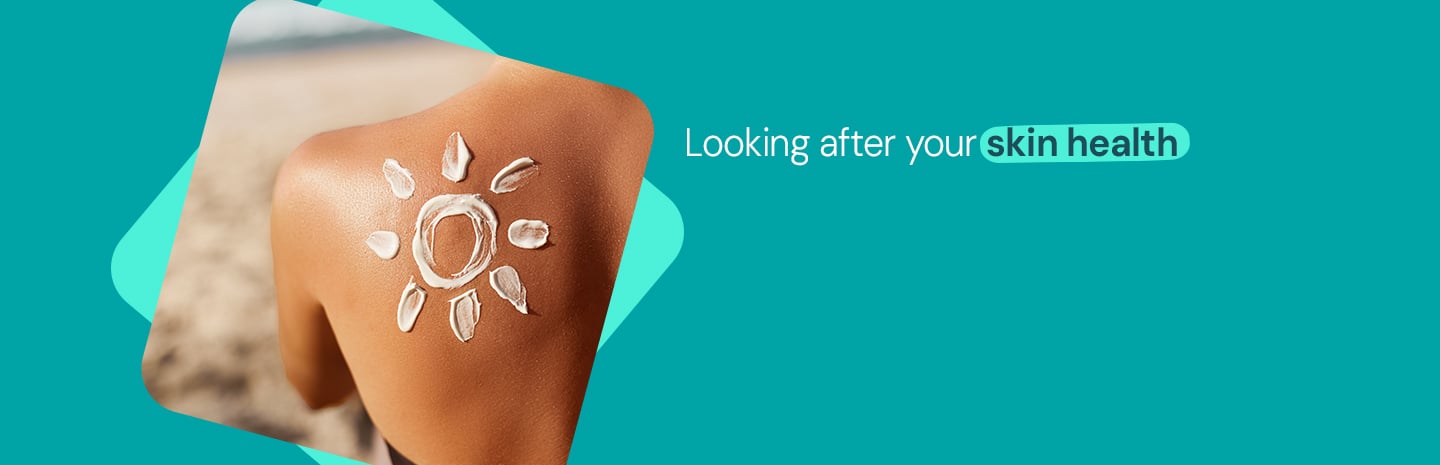

There are around 175,000 cases of skin cancer every year in the UK. The most common cause of skin cancer is being exposed to too much UV radiation — this comes from the sun’s rays and from tanning beds and tanning lamps.
To reduce your risk, it’s essential to avoid sunbathing and using tanning beds or tanning lamps. You also need to protect yourself against UV damage from the sun by staying in the shade, wearing sun-protective clothing and using sunscreen properly.
Here, we’ll explore how, when and how often to apply sunscreen, as well as other tips to protect your skin from UV damage.
What is sunscreen?
Sunscreen protects your skin from UV damage caused by the sun’s radiation, specifically UVA and UVB radiation.
There are different types of sunscreen, but they can be grouped into 2 categories:
- Organic sunscreens, also known as mineral sunscreens — these are thicker as their active ingredients (eg zinc oxide and titanium dioxide) don’t dissolve in water or oil
- Inorganic sunscreens, also known as chemical sunscreens — these are thinner as their active ingredients (eg chemicals such as oxybenzone and octinoxate) dissolve in water or oil
Both mineral sunscreens and chemical sunscreens absorb UV rays to prevent them from passing into your skin. However, mineral sunscreens also scatter a very small amount of UV radiation to prevent it from passing into your skin.
Why you need to use sunscreen
Sunscreen protects your skin from the damaging effects of UVA and UVB radiation.
Most UV radiation from the sun that reaches the ground is UVA, which passes into the deeper layers of your skin. A small amount of UV radiation is UVB radiation, which only reaches the outer layers of your skin.
The most obvious consequence of not using sunscreen is sunburn. This happens when UVB rays from the sun pass into your skin. It causes your skin to become inflamed, red, hot and painful. You can become sunburnt in just 15 minutes if you’re not using any sunscreen.
Sunburn damages the DNA in your skin cells, which increases your risk of developing skin cancer. In fact, just 1 severe sunburn in childhood more than doubles your risk of skin cancer in adulthood.
Although UVA radiation is not the main cause of sunburn, it still increases your long-term risk of skin cancer by damaging the DNA of cells in the lower layers of your skin. It also causes premature ageing of your skin by damaging collagen and elastin fibres, which together help your skin stay strong and supple.
The combined effects of UVA and UVB radiation can worsen existing skin conditions, such as rosacea and eczema.
Your sunscreen options
Which SPF should you pick?
The main consideration when choosing sunscreen is the SPF or sun protection factor. This means how long your skin will be protected from sunburn when using the sunscreen as directed versus without any sunscreen. It specifically refers to protection against UVB radiation, which is largely responsible for increasing your risk of skin cancer.
The higher the SPF of your sunscreen, the more protected your skin is against UVB radiation. An SPF30 sunscreen blocks around 97% of UVB radiation, while an SPF50 sunscreen blocks around 98% of UVB radiation.
The NHS recommends using a sunscreen of at least SPF30. This means, if used properly, it will take 30 times longer for your skin to become sunburnt than if you aren’t using any sunscreen.
You need to reapply sunscreen every 2 hours as the protective ingredients break down as they’re exposed to the sun. Sunscreen may also rub off or be washed away by sweat, water or friction.
Which star rating should you pick?
Sunscreen sold in the UK usually also uses a star rating system, with the highest rating being 5 stars. The star rating refers to the level of protection against UVA radiation. The NHS recommends using a sunscreen with at least a 4-star rating.
Your sunscreen may also have the letters UVA in a circle. This symbol means your sunscreen meets EU standards for UVA protection.
Creams, sprays and other formulations
Sunscreen comes in many forms, including creams, gels, lotions, sprays, sticks and powders. You can use any of these; however, the key is making sure you follow the application instructions completely and reapply at least every 2 hours.
If you have dry skin, you may find that a sunscreen cream is more hydrating, while if you have oily skin, you may find a sunscreen gel less greasy. A sunscreen stick may be easier to use on your face eg on your eyelids.
Whichever type of sunscreen you choose, make sure you have complete coverage of any exposed skin.
Some sunscreens are also water-resistant. This doesn’t mean they’re waterproof — water and sweat will still ultimately remove the sunscreen. If you go swimming or are sweating a lot, reapply your sunscreen more often than every 2 hours.
How to apply sunscreen properly
Make sure your sunscreen is in date — expired sunscreen is less effective at protecting your skin.
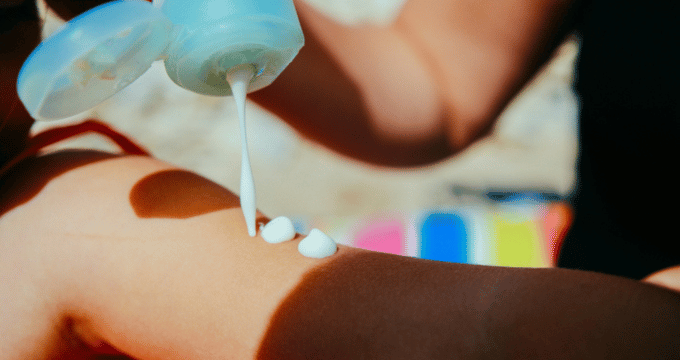
Apply it 15–30 minutes before you go outdoors. This gives your skin time to absorb the sunscreen. If you know you’ll be out in the sun for a long time, top up your sunscreen before you leave.
Cover every area of exposed skin with a good amount of sunscreen. Remember to include parts of your body that are covered with lightweight, loosely woven clothing as the sun rays can pass through them.
As a general guide, you’ll need at least 1 teaspoon of sunscreen to cover your face properly. To cover the whole body of an average adult, at least 8 teaspoons of sunscreen are needed.
Remember to apply sunscreen to your feet, neck and ears. If you’re bald or have thinning hair, you also need to apply sunscreen to the top of your head.
Sunscreen is not just for the summer months. Although UV levels are lower in spring, autumn and winter, your skin can be damaged by the sun’s UV radiation year-round. This is also true on cloudy days — cloudy weather can allow up to 80% of UV radiation to come through.
How to use sunscreen with moisturiser and makeup
Wearing makeup doesn’t mean you should skip wearing sunscreen, even if you use SPF makeup. The SPF level in SPF makeup is often less than SPF30, and even with a higher SPF, when applied as makeup, it’s unlikely you’ll get complete, even coverage over your exposed skin.
Apply sunscreen before you put on any makeup or primer. Give your skin at least 15 minutes to absorb the sunscreen before applying anything else. Cleanse your skin and use serums, treatments and/or moisturiser before you apply your sunscreen.
Once your makeup is on, you should still top up your sunscreen every 2 hours. You can use a sunscreen spray or apply a sunscreen cream using a makeup sponge.
More than sunscreen: other sun safety tips
Although sunscreen is an essential part of protecting your skin from UV damage and reducing your risk of skin cancer, you should also take other steps to protect yourself from the sun.
Wear sun-protective clothing and sunglasses
Wear clothing that covers your skin. Opaque clothing provides better protection than loosely woven clothing.
Wearing a hat will help protect your upper body. Ideally, wear a wide-brimmed hat rather than a baseball cap, as this will provide shade for the nape of your neck and tops of your ears, which are most often exposed to the sun.
Your eyes can also be damaged by UV radiation, increasing your risk of early cataracts, eye cancer and sunburn of your corneas (photokeratitis).
Look for sunglasses with UV protection. Sunglasses sold in the UK with effective UV protection will have the CE or UV400 mark. Wraparound sunglasses offer the best protection as they shield your eyes from sunlight coming in from the sides.
Check the weather
Weather apps and websites can tell you when UV levels are particularly high. You can then plan your outings accordingly and look for shade at certain times of the day.
Ideally, aim to stay in the shade between 11am and 3pm. If you need to be out in the sun, wear sunscreen if the UV index is 3 or higher.
Take extra care with children in the sun
Children are especially vulnerable to sun damage as their skin has not fully matured and is thinner (Gefeller et al, 2022). A single episode of severe sunburn in childhood more than doubles the risk of skin cancer in adulthood.
The risk of UV damage to children’s eyes is also greater because their lenses are clearer and their pupils are larger, which means more UV radiation enters their eyes. Around 80% of UV exposure to the eyes over an entire lifetime happens before age 18.
It’s, therefore, especially important for children to use sunscreen every day and to wear sunglasses and a hat, particularly during daylight hours when UV levels are high (11am to 3pm).
Swimming and sunscreen
Water removes sunscreen and reflects UV radiation, increasing your exposure, so you should reapply sunscreen after being in the water and drying yourself. You also need to reapply sunscreen if you’re sweating.
Even using water-resistant sunscreen will still be removed by sweat and water, reducing your protection.
How to treat sunburn
To cool yourself after sunburn, use a sponge to dab your body with cold water or have a cool bath or shower. You can take paracetamol to manage any pain and ibuprofen to reduce inflammation.
Avoid going back out into the sun until the redness has completely gone. You can also apply a fragrance-free moisturiser to hydrate your skin.
Skin cancer and prevention
Around 9 in 10 cases of melanoma skin cancer — the most serious type of skin cancer — could be prevented by following sun safety guidance, according to Cancer Research UK.
Although melanoma only accounts for around 1 in 25 cases of skin cancer, it’s most likely to spread to other tissues. However, when caught early, before it’s spread further than the top layer of skin, it can be effectively treated with surgery called malignant skin cancer excision.
The most common type of skin cancer is non-melanoma skin cancer, with over 100,000 new cases diagnosed in the UK every year. It’s most common in older people due to DNA damage caused by the sun’s UV radiation that has accumulated over decades.
The most effective way to reduce your risk of both types of skin cancer is to protect your skin year-round and at every age.
Skin treatments
Our consultant dermatologists provide diagnosis and treatment for a range of skin problems such as skin cancer, eczema and psoriasis.
FAQs
Who should take extra care in the sun?
Anyone of any skin colour can get skin cancer. However, your risk is higher if you have a family history of skin cancer or have a skin condition. Other physical characteristics that increase your risk include having pale, white or light brown skin, moles or freckles, red hair and/or light-coloured eyes.
Your environment also affects your risk. For example, if you live in a temperate country, such as the UK, your risk of sun damage is higher if you occasionally spend time in a country where the sun is more intense (eg when on holiday). Your risk is also higher if you spend a lot of time outdoors.
Do moles and freckles increase my risk of skin cancer?
Yes, having lots of moles and freckles does increase your risk of skin cancer. Freckles usually occur on lighter-skinned individuals and are a sign that your skin is more vulnerable to UV damage. Existing moles can become cancerous, although most cases of melanoma skin cancer occur in new moles. However, having lots of moles can make it harder to spot when a new, abnormal mole develops.
If you have lots of moles or freckles, you should take extra care in the sun and follow sun safety rules year-round ie wear sunscreen and sun protective clothing, and avoid being outdoors during peak sunshine hours.
Do I need to use sunscreen in winter?
Yes, you should use sunscreen year-round. Although UV levels are lower in winter and autumn than in spring or summer, UV damage throughout the year can still damage your skin. Over time, this accumulated damage increases your risk of skin cancer.
