
Skin cancer is one of the most common types of cancer worldwide. It can be broadly divided into 2 groups: melanomas and non-melanomas.
Non-melanoma skin cancer is the most common cancer in the UK. Melanomas are far less common, making up roughly 1 in every 25 skin cancer cases. However, melanoma skin cancer has a much higher risk of spreading to other parts of your body. This makes it harder to successfully treat.
However, when diagnosed early, melanomas are highly treatable. That’s why it’s so important to know the warning signs of melanoma.
Here, we’ll explore the 5 main signs of melanoma — also known as the ABCDEs of melanoma — how it’s treated and how to reduce your risk of developing melanoma.
What is a melanoma?
A melanoma is a type of skin cancer that starts in cells inside the skin called melanocytes. These are pigment cells. Melanomas, therefore, usually first appear as a new mole or freckle. However, for every 10 cases of melanoma, 2–3 develop from an existing mole or freckle.
5 melanoma warning signs
If you notice any warning signs of melanoma, it doesn’t mean that you definitely have skin cancer. However, have your mole or freckle checked as soon as possible to rule out a melanoma.
1. A is for asymmetry
Melanomas are usually not symmetrical. This means one half looks different from the other half. Non-cancerous (benign) moles and freckles are usually symmetrical.
2. B is for border
The border of a benign mole or freckle is usually smooth, while the border of a melanoma is irregular, ragged, blurry or scalloped.
3. C is for colour
Melanomas are usually a mix of different shades and colours, while benign moles and freckles are the same colour throughout. A melanoma can be a mix of black, brown, grey, blue, red, pink and white.
4. D is for diameter
Benign moles and freckles usually stay the same size or change size very slowly over many years. In contrast, melanomas change size — usually increasing in diameter — over days, weeks and months.
Melanomas can be very small, but they’re usually 6mm or larger. That’s around the width of a pencil or wider.
5. E is for evolution
Melanomas change over a short period of time, ie days, weeks or months. You may notice a change in their size, shape, colour or texture. You may also notice that a suspicious mole or freckle is bleeding, crusting, feels itchy or tender.
How to spot a melanoma: the ‘ugly duckling’ method
If you have freckles and/or moles, the ‘ugly duckling’ method can help when checking your skin for changes. It means looking for a mole or freckle that looks different from the rest. You may notice that it’s larger, more raised or different in colour from the rest of your moles or freckles.
What to do if you notice signs of melanoma
If you spot any signs of melanoma, book an appointment to see your GP. It can also be helpful to take a photo of the affected area of your skin, so you can track any changes.
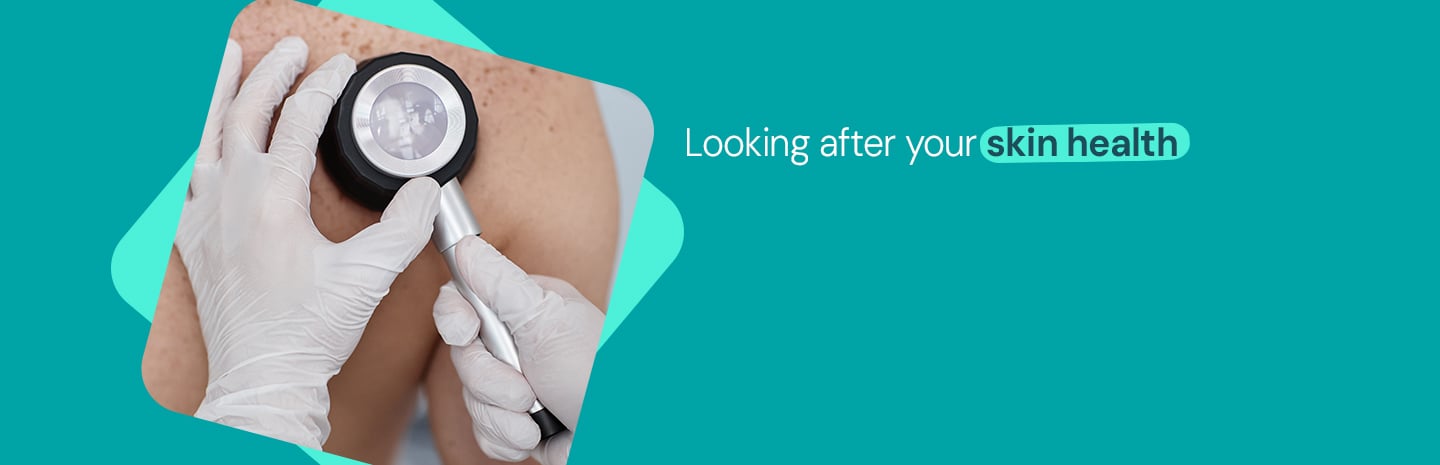
Your doctor will check your skin and, in some cases, may examine it more with a dermascope — a specialised microscope that captures high-resolution images of your skin.
If they determine that your mole or freckle looks abnormal, they may refer you to a doctor who specialises in treating the skin (a dermatologist). If they suspect that you have a melanoma, they will make an urgent referral to a dermatologist for treatment.
How is melanoma treated?
In the earliest stage of melanoma (melanoma in situ), the cancer cells have not spread beyond the top layer of the skin. In these cases, treatment involves removing the melanoma through a surgical procedure called a malignant skin cancer excision.
This is usually performed under a local anaesthetic where you’re awake but don’t feel any pain. However, in some cases, a general anaesthetic may be used, where you’ll be asleep. The melanoma will be removed, as well as a margin of healthy tissue around it.
If the melanoma has spread into deeper layers of the skin but not elsewhere in the body, surgery may be enough, or you may need immunotherapy or targeted cancer drugs as well.
If the melanoma has spread beyond the skin, you may need a variety of additional treatments after surgery. This may include immunotherapy, targeted cancer drugs, radiotherapy and/or chemotherapy.
Skin treatments
Our consultant dermatologists provide diagnosis and treatment for a range of skin problems such as skin cancer, eczema and psoriasis.

How to check your body for melanomas
It’s important to check your skin every month for new moles or freckles, and changes to existing moles and freckles.
Ideally, after you have a shower or bath, stand naked in front of a full-length mirror and check the front of your body. Then turn around. Holding a handheld mirror, check the back of your body.
You should use a handheld mirror to check harder to reach areas, such as your genitals and buttocks. You also need to check the palms of your hands, soles of your feet, backs of your ears, lips and inside your mouth.
Take photos and make a note of any changes, so you have a record when you visit your GP or dermatologist.
How to reduce your risk of skin cancer
You can significantly reduce your risk of melanoma by protecting your skin from the damaging effects of UV radiation.
This involves wearing sunscreen and regularly topping it up when outdoors, especially in the summer months when your skin is exposed to more hours of daylight. You should also wear sun protective clothing, hats and sunglasses to expose less of your skin to the sun.
If possible, avoid being outdoors during the midday sun as UV levels are higher during these hours.
Never use tanning beds and avoid sun tanning — tanning of any kind is not safe for your skin.
For children, make sure they practice these sun-safe methods too. One incident of a bad sunburn before age 18 doubles the risk of melanoma in adulthood, as children’s skin is more sensitive to UV damage.
