

Private cataract surgery Crawley
Improve blurred vision caused by cloudy areas on the lens of the eye.
At Spire Gatwick Park Hospital, we use trusted and clinically proven techniques to remove cataracts and improve your eyesight, so you can get back to everyday activities.
Cataract surgery involves replacing a cloudy lens in your eye with a clear artificial lens to improve vision.
Sometimes also called
- Phacoemulsification
At a glance
-
Typical hospital stay
A few hours -
Procedure duration
1 hour -
Type of anaesthetic
Local -
Available to self-pay?
Yes -
Covered by health insurance?
Yes
Why Spire?
- Fast access to a wide range of treatments
- Consultants who are experts in their field
- Clear pricing with no hidden charges
Cataract surgery: what to expect at Spire Gatwick Park Hospital
At Spire Gatwick Park Hospital we have many dedicated ophthalmologists who specialise in cataract removal surgery to improve your vision in a relatively straightforward procedure.
There’s no need to wait to have cataract surgery. We offer access to tests, scans and treatment without the wait, and easy booking with appointment times to suit you.
How much does Cataract removal surgery cost at Spire Gatwick Park Hospital
It’s a common procedure to have done privately, and our inclusive prices and access to payment plans make it easy and more affordable, even if you don’t have medical insurance.
| Cataract surgery with eyesight correction | |||
|---|---|---|---|
| Initial consultation | We can't display the initial consultation fee just now. Call us for a quote. | ||
| Treatment price | £2,894 | ||
| Aftercare | Included | ||
| From price | From £2,894 | ||
|
Monthly treatment price (Loan applicable to the treatment cost and excludes the initial consultation) |
£143 | ||
| Representative example | |
|---|---|
| Loan amount | £2,394 |
| Deposit | £500 |
| Loan period | 18 months |
| Representative APR | 9.9% |
| Total amount repayable | £2,574 |
The price shown is the ‘from price’ (ie the minimum cost of the procedure). Please note that for some procedures the actual price you are quoted may vary significantly and can increase depending on your choice of Consultant (who is an independent practitioner and not an employee of Spire). The fees charged by Consultants and Anaesthetists are set independently and are outside the control of Spire. The price may also vary depending on the type of anaesthetic, implant or drug used, and your medical history.
Spire Gatwick Park Hospital can provide you with a single, fixed price for your procedure so there are no surprises. Please read Spire Healthcare's terms and conditions for full details of what’s included and excluded in your fixed price when paying for yourself. Finance options are available through our partner Omni Capital Retail Finance Ltd, 10 Norwich Street, London, EC4A 1BD.
Procedures offered for cataract surgery at Spire Gatwick Park Hospital
At Spire Gatwick Park Hospital, we offer a range of premium intraocular lenses. Your consultant will help you choose the best option for you. They include:
- Monofocal – to correct either near or distance vision, with a choice of three focal points
- Toric – a monofocal lens that helps correct astigmatism (a problem with focusing)
- Multifocal – to correct both near and distance vision, like varifocal glasses
- Trifocal – to correct intermediate vision, as well as near and distance vision
- Secondary piggyback lens – to correct refractive error (short- or near-sightedness) after cataract surgery
We also have special equipment which use a variety of biometry and refractive techniques to measure the shape and size of your eye. This is so your consultant can calculate the power of your intraocular lens implants.
You may still need to wear glasses afterwards, depending on your eyesight and your choice of lens.
Find a consultant at Spire Gatwick Park Hospital
Preparing for cataract surgery at Spire Gatwick Park Hospital
Getting here
We're just a few miles from Gatwick Airport, the M25 and M23 motorways, central London and Victoria station are a 30 minute train ride away. We have free parking on-site for you and your visitors.
Your consultations
One of our highly trained consultant ophthalmologists will offer you an appointment within a few days of your enquiry. You’ll meet them in one of our 12 consultation rooms to discuss any symptoms or a previous diagnosis. They may carry out tests such as:
- Sight tests
- Biometry testing – to calculate the power of the new intraocular lens (IOL) required
- Optical coherence tomography - used to create an image of your retina
Your consultant will explain how cataract surgery works and the options available to you, what you can expect afterwards and any risks. This is a good opportunity for you to ask any questions.
Cataract removal surgery
Watch how cataract removal surgery takes place
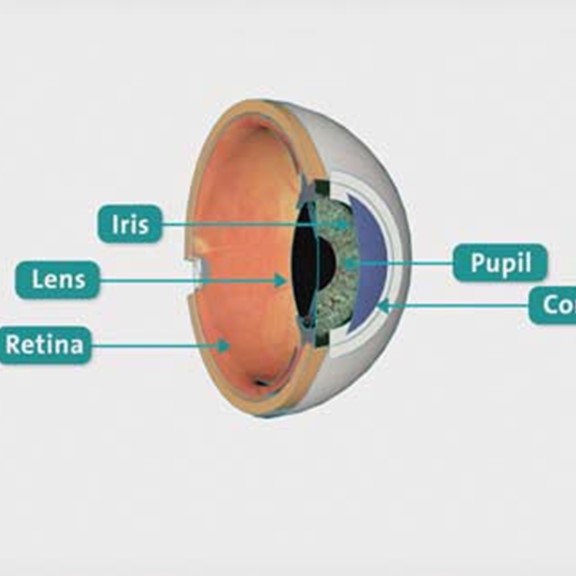
Cataract surgery: your procedure
When you come in for your operation, you’ll only be with us for a couple of hours so you won’t need to bring much. However, you may need:
- Sunglasses or a hat to wear when leaving hospital as things may look bright afterwards
- Hearing aids if you wear them
- A change of shirt or top as a rinsing fluid is used during the procedure
If you’ve come with a friend or family member, they’re welcome to wait in our lounge while you have your surgery.
Here’s what will happen after you arrive for your cataract surgery:
- You’ll meet your surgery team and will be given eye drops to dilate your pupil and make it easier for your surgeon to see your lens
- You may be given a sedative to help you feel relaxed
- You’ll also be given a local anaesthetic, usually in the form of eye drops, so you won’t feel anything during the procedure
- Your surgeon will make a small incision in the front of your eye (cornea) and remove your clouded lens, using a process called phacoemulsification, which breaks the lens up into small fragments
- They’ll then insert your new intraocular lens
Q & A
Roger McPherson, Consultant Ophthalmic Surgeon
Talking about cataract surgery

Cataract surgery: your recovery
After your cataract surgery, you’ll be taken to a recovery room to relax until your surgeon says you’re ready to go home. This is usually a few hours after cataract surgery.
Although everybody’s different and you should always follow your consultant’s advice, here’s a typical recovery timeline for cataract surgery:
Treatment and recovery timeline

1 week
Any eye pain, redness or itching should go
7-14 days
Stop wearing eye shield at night
10-14 days
Clear eyesight restored
4-6 weeks
Fully back to normal
-
1 week
Any eye pain, redness or itching should go
-
7-14 days
Stop wearing eye shield at night
-
10-14 days
Clear eyesight restored
-
4-6 weeks
Fully back to normal
The treatment described on this page may be adapted to meet your individual needs, so it's important to follow your healthcare professional's advice and raise any questions that you may have with them.

How to get to us
We're just a few miles from Gatwick Airport, the M25 and M23 motorways. Central London and Victoria station are only a 30 minute train ride away.
Spire Gatwick Park Hospital,
Povey Cross Road
Horley
Surrey
RH6 0BB
Get in touch
Important information about COVID-19 tests
COVID-19 testing or antibody tests are not available as a standalone service at Spire Gatwick Park Hospital.