

Private knee replacement Farnham
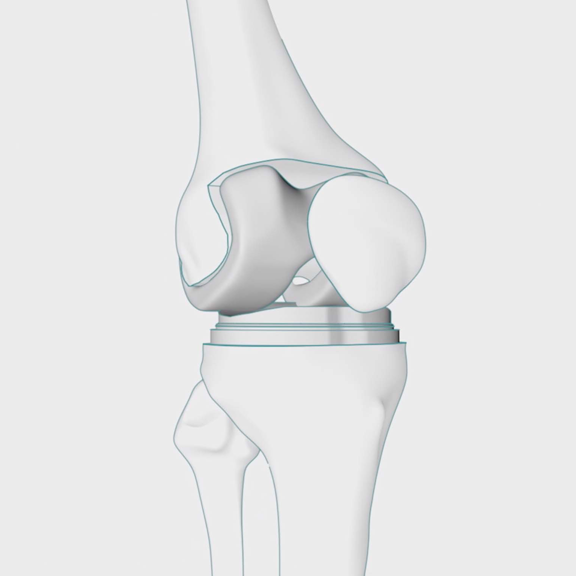
An artificial knee joint is used to replace the damaged joint.
At Spire Clare Park Hospital, we use many of the latest knee replacement techniques and innovations, along with expert aftercare, to help you get the most from your knee replacement.
A knee replacement is a common operation to remove worn or damaged parts of your knee joint and replace them with an artificial joint, making movement easy and free from pain again.
Sometimes also called
- Patellofemoral replacement
- Partial knee replacement (PKR)
- Revision knee replacement
- Total knee replacement (TKR)
- Unicompartmental knee replacement
The procedure(s) listed above are examples only and may not be available at all Spire hospitals.
At a glance
-
Typical hospital stay
2–3 days -
Procedure duration
1–2 hours -
Type of anaesthetic
General, spinal or epidural -
Available to self-pay?
Yes -
Covered by health insurance?
Yes
Why Spire?
- You can usually see a consultant within a few days of enquiry
- Consultants who are experts in their field
- Clear, inclusive pricing
- Rated 'Good' by the Care Quality Commission
Knee replacement surgery: what to expect at Spire Clare Park Hospital
At Spire Clare Park Hospital, our orthopaedic (bone and muscle) teams are highly skilled and dedicated to providing top quality treatment and care that’s personalised to you. We’re proud to be rated as Good by the Care Quality Commission.
We offer fast access to diagnostic tests and scans, so you don’t have to wait long to find out if treatment is right for you. We expect it to take three to four weeks from your initial appointment to having your knee replacement surgery.
How to book
To book a knee replacement, complete the enquiry form or call 01252 850 216.
Choose Spire Clare Park Hospital if you live in Farnham, Fleet, Alton or other local areas.
How much does Knee replacement cost at Spire Clare Park Hospital
It’s a common operation to have done privately, and our inclusive prices and access to payment plans make it easy and more affordable, even if you don’t have medical insurance.
| Knee replacement | |||
|---|---|---|---|
| Initial consultation | We can't display the initial consultation fee just now. Call us for a quote. | ||
| Treatment price | £14,160 | ||
| Aftercare | Included | ||
| From price | From £14,160 | ||
|
Monthly treatment price (Loan applicable to the treatment cost and excludes the initial consultation) |
£324 | ||
| Representative example | |
|---|---|
| Loan amount | £12,910 |
| Deposit | £1,250 |
| Loan period | 48 months |
| Representative APR | 9.9% |
| Total amount repayable | £15,552 |
The price shown is the ‘from price’ (ie the minimum cost of the procedure). Please note that for some procedures the actual price you are quoted may vary significantly and can increase depending on your choice of Consultant (who is an independent practitioner and not an employee of Spire). The fees charged by Consultants and Anaesthetists are set independently and are outside the control of Spire. The price may also vary depending on the type of anaesthetic, implant or drug used, and your medical history.
Spire Clare Park Hospital can provide you with a single, fixed price for your procedure so there are no surprises. Please read Spire Healthcare's terms and conditions for full details of what’s included and excluded in your fixed price when paying for yourself. Finance options are available through our partner Omni Capital Retail Finance Ltd, 10 Norwich Street, London, EC4A 1BD.
Procedures offered for knee replacement at Spire Clare Park Hospital
At Spire Clare Park Hospital, we have vast experience in performing knee replacement surgery in our high-quality facilities, including two operating theatres with laminar flow. These theatres regulate air flow to reduce the risk of infection.
Some of our consultants use 3D models of your knee, created using computer-assisted technology to help guide them during your operation.
Find a consultant at Spire Clare Park Hospital
Preparing for knee replacement at Spire Clare Park Hospital
Getting here
Spire Clare Park Hospital is set between Farnham and Fleet, providing treatment for patients in Surrey and surrounding areas. Farnham train station is a 10 minute taxi ride away, with free parking available.
Your consultations
Consultations will take place in one of our 11 private and accessible rooms. Your consultant will ask about your medical history and may recommend tests and scans to help examine your joints in more detail.
Consultations are also a good time to ask any questions you have about your surgery.
Full knee replacement surgery
Watch how a knee replacement surgery takes place
Knee replacement: your procedure
On the day of your procedure, our ward staff will show you to your room and get you settled in. If you’ve come with a friend or family member, they’re welcome to wait in our lounge or restaurant while you have your operation.
Your consultant and surgical team will prepare you for your operation.
Anaesthetic options
You’ll probably have a general anaesthetic, so you’ll be completely asleep. However, sometimes it’s preferable or necessary to have an epidural (spinal) anaesthetic, where you’re numb from the waist down. If so, your anaesthetist can give you sedatives to help you relax during the operation.
Visit our main knee replacement page for more information.
During your operation
Your consultant will make the necessary incisions and begin to remove worn or damaged areas of your knee joint. They’ll then fit your new knee and close your incisions.
The operation should take no more than a couple of hours. You’ll start your recovery at Spire Clare Park, staying with us for two to three days.
Q & A
Winston Kim, Consultant Orthopaedic Surgeon
Talking about knee replacement surgery

Knee replacement surgery: your recovery
After surgery, you’ll begin recovery in one of our 34 comfortable private bedrooms. Your room will have:
- Armchair
- En-suite facilities
- Side table
- TV
- Window
Our team will ensure you’re as comfortable as possible while you recover, providing pain relief to help manage any of the normal discomforts you might feel.
Although everybody’s different and you should always follow your consultant’s advice, here’s a typical recovery timeline for knee replacement surgery:
Treatment and recovery timeline

Day 1
2 years
Day 1
Stand using a walking aid
2–3 days
Leave hospital
1 week
Walk with a walking aid
4–6 weeks
May be able to drive
6 weeks
Walk without crutches
3 months–1 year
No more pain and swelling
2 years
Full recovery
-
Day 1
Stand using a walking aid
-
2–3 days
Leave hospital
-
1 week
Walk with a walking aid
-
4–6 weeks
May be able to drive
-
6 weeks
Walk without crutches
-
3 months–1 year
No more pain and swelling
-
2 years
Full recovery
Areas served
At Spire Clare Park Hospital, we provide some of the latest surgical techniques for patients in Surrey, Berkshire and Hampshire, including local areas like Farnham, Alton and Fleet.
Choose your Surrey-based consultant today to arrange your first appointment in our clean, modern facility.
You can learn more about the knee replacement procedure on our main knee replacement page.
The treatment described on this page may be adapted to meet your individual needs, so it's important to follow your healthcare professional's advice and raise any questions that you may have with them.

How to get to us
Our location between the towns of Farnham and Fleet allows us to provide medical and surgical treatments to patients from Surrey, Hampshire, Berkshire and West Sussex.
Spire Clare Park Hospital,
Crondall Lane
Farnham
Surrey
GU10 5XX
Get in touch
Important information about Covid-19 tests
COVID-19 testing or antibody tests are not available as a standalone service at Spire Clare Park Hospital.
Sources
http://www.boa.ac.uk/patient-information/expectations-of-an-orthopaedic-patient-preferring-private-treatment/
http://www.boa.ac.uk/patient-information/expectations-elective-orthopaedic-patients-revised-may-2014/
https://www.mayoclinic.org/tests-procedures/knee-replacement/about/pac-20385276
https://www.medicinenet.com/total_knee_replacement/article.htm
https://www.healthline.com/health/total-knee-replacement-surgery
https://www.nhs.uk/conditions/knee-replacement/
https://www.nhs.uk/conditions/knee-replacement/what-happens/
https://www.nhs.uk/conditions/knee-replacement/risks/
https://www.nhs.uk/conditions/knee-replacement/recovery/
https://www.health.harvard.edu/pain/4-types-of-knee-implants
https://www.arthritisresearchuk.org/arthritis-information/surgery/knee-replacement.aspx
https://www.versusarthritis.org/about-arthritis/treatments/surgery/knee-replacement-surgery/
https://www.nice.org.uk/guidance/cg177/chapter/1-Recommendations#diagnosis-2
https://www.nice.org.uk/guidance/qs87/chapter/Quality-statements
https://www.nice.org.uk/guidance/qs87/chapter/Quality-statement-1-Diagnosis